Imagining Brazil
Why Choose Brazil as the Subject of an Epic Novel?

The Mansions and the Shanties, Gilberto Freyre
The Masters and the Slaves, Gilberto FreyreOrder and Progress, Gilberto Freyre
New World in the Tropics, Gilberto FreyreBandeirantes and Pioneers, Vianna MoogHistory of Portugal, Antonio H. de Oliveira MarquesPortuguese Seaborne Empire, Charles R. BoxerPortugal and Brazil, Harold Livermore and W.J. EntwhistleColonial Background of Modern Brazil, Caio Prado, Jr.The Brazilians, José Honorio RodriguesLatin America, Preston E. JamesHistory of Brazil, Andrew Grant, 1809History of Brazil, E. Bradford BurnsFrom Barter to Slavery, Portuguese and Indians, 1500-1800, A. MarchantCaptains of Brazil, Elaine SanceauTrue History of His Captivity, Hans StadenDiscovery of the Amazon, according to account of Fr. Gaspar de CarvajalThe Histories of Brazil, Pero de Magalhaes, trs. John B. StetsonHakluyt, the Principal Navigations, Volume XIA Treatise of Brazil, Padre Fernão de Cardim in Purchas, his Pilgrims XVIDutch in Brazil, 1624-1654, Charles R. BoxerGolden Age of Brazil, 1695-1750 , Charles R. BoxerSalvador de Sa and the Struggle for Brazil and Angola, Charles R. BoxerBrazil, Portrait of Half a Continent, T. Lynn SmithApostle of Brazil: Padre João Anchieta, Helen G. DominianJews in Colonial Brazil, Arnold WiznitzerThe Negro in Brazil, Arthur Ramos trs. Richard PatteeNeither Slave nor Free, David W. Cohen and Jack P. GreeneAfrican Religions of Brazil, Roger BastideBrazilian Culture, Fernando de Azevedo, trs. William R. CrawfordEvolution of Brazil, Manoel de Oliveira LimaRebellion in the Backlands, Euclides da Cunha
Daydreaming about Anacondas, Headhunters and El Dorado
Between daydreams about Fawcett, I'd been writing stories from the age of ten. I was seventeen when I penned my first novel, a three-hundred page saga of teenage angst in a small town in South Africa. Unpublished, I included it with my application to the Star and to my everlasting gratitude, the editors decided to take a chance on me. Three weeks after joining the paper, my name was in print for the first time beneath an article on the editorial page: Happiness is an Unprejudiced Mind.
Inside Brazil - Take A Magical Journey Beyond The Clichés and Stereotypes
Brazil is a spellbinding saga of two powerful families that depicts five turbulent centuries in the history of a remarkable land. From colony to kingdom, from empire to nation, Brazil is filled with memorable people living through one of the great adventures in human history.
When writer Errol Lincoln Uys sat down to tell the story of Brazil, he had a key objective in mind: Avoid the stereotypical images of Brazil and its people.
"I rejoice in Carnival, samba, soccer," says Boston-based Uys (pronounced 'Ace'). "Like so many gringos, I knew little else about Brazil. In writing my novel, I discovered one of the great adventures in human history -- the story of an extraordinary people who built the dynamic nation we see today."
Two powerful families drive the story alongside an awesome array of characters, fictional and real. The Cavalcantis are among the original settlers and establish the classic Brazilian plantation -- vast, powerful, built with slave labor. The da Silvas represent the second element in both contemporary and historical Brazil: pathfinders and prospectors. For generations, these adventurers have set their eyes on El Dorado, which they ultimately find in a coffee fortune at Sāo Paulo.
Brazil is an intensely human story, brutal and violent, tender and passionate. Perilous explorations through the Brazilian wilderness . . . the perpetual clash of pioneer and native, visionary and fortune hunter, master and slave, zealot and exploiter . . . the thunder of war on land and sea as European powers and South American nations pursue their territorial conquests... the triumphs and tragedies of a people who built a nation covering half the South American continent, all are here in one spell-binding saga.
Just how successful Errol Lincoln Uys is in capturing the Brazilian epic is best judged by what Brazilian reviewers and readers say about Uys’s 800-page masterpiece devoted to their country.
“Brazil is a classic which will be enjoyed by many in the years to come.” — Agenor Soares dos Santos
“Brazil is a country of enormous contrasts and you had great insight in reflecting such differences in your book through the lives of two fictional families, one from the north and one from the south. When I read your book those feelings I had about the contrasting reality we face daily in Brazil were translated into words. I felt that a puzzle was finally put into place. I hope that writing this book has given you as much pleasure as I had in reading it. “ — Maria Pereira de Queiroz Brandão Teixeira
“Your book gave me a completely new way of viewing Brazilian and Portuguese history. Suddenly everything seemed clear: The raw truthfulness that was the reality of those times and which never comes across so clearly or vividly in history books. Truly, Brazil is a masterpiece!” – Vasco Cartó
“A beautiful work! It took more than a month to read your book, but I enjoyed every moment. It's one of the most solid researches I've seen covering five centuries of Brazil's multi-faceted history. The story line is gripping, easy to understand. My sincere congratulations. “ — Professor Max Justo Guedes
“Brazil is a monumental novel. It shows the juxtaposition of sensual/brutal Brazil...It is amazingly on target not only in the historical sense but insightful for the complex modern Brazil, principally the all-important extended family. A theme vividly illustrated in the first chapters and carried throughout the novel.” — Edson Nery da Fonseca
“I am Brazilian but have lived in the United States since the age of two. After reading your novel, I feel I can regain the culture that I lost — I feel more Brazilian! I don't believe I would ever have felt this strongly about my people if I hadn't read your book.” — Moises A. dos Santos
Says Wilson Martins, one of Brazil’s most eminent literary critics: “Errol Lincoln Uys is the first to write our national epic in all its decisive episodes – the first outsider to see Brazil with total honesty and sympathy. Descriptions like those of the war with Paraguay are unsurpassed in our literature and evoke the grand passages of War and Peace.”
"A masterpiece! Brazil has the look and feel of an enchanted virgin forest, a totally new and original world for the reader-explorer to discover. -- L'Express, Paris
"Pulsing with vigor, this is a vast novel to tell the story of a vast country. Uys depicts Brazil's evolution from colony to empire to republic. Lacing the tale together are two families: the Cavalcantis, planters and slave owners; and representing another fundamental social stream, the da Silvas, prospectors, adventurers, seekers of El Dorado." Publishers Weekly
"No one before knew how to bring to life Brazil and her history. Uys's characters are brilliant and colorful, combining elements of the best swashbuckler with those worthy of deepest reflection. Most stunning is that it took a South African, now a naturalized American, to evoke so perfectly the grand but interrupted dream that is Brazil." -- Le Figaro, Paris
What better way for the reader-explorer of an epic as vast as Brazil to discover a totally new and original world! A great summer read!
FREE ONLINE EXTRAS
AN ILLUSTRATED GUIDE TO BRAZIL, THE NOVEL – WITH 300 IMAGES AND MAPS
AUTHOR’S JOURNAL FROM A FOUR-MONTH, 15,000-MILE TREK FROM THE AMAZON JUNGLE TO THE SOUTH OF BRAZIL
THE MAKING OF A NOVEL, WRITER’S GUIDE TO THE AUTHOR’S FIVE-YEAR QUEST FOR BRAZIL
What James Michener Said About "Brazil" by Errol Lincoln Uys
“Dear Errol,
On this little island, in this little town, the little bookstore carries in its window a copy of Brazil prominently displayed as one of the fine novels of the season. Glad to see on my latest walk that the copy had been sold.
I’m delighted with the reception so far and hope that the book enjoys, as it should, a long, long run.
Best of good fortune in all you attempt. You know how to write.” -- Jim
(Sheldon Jackson College, Sitka, AK, August 28, 1986)
“I read with considerable care the substantial segments you sent and can, with honesty and propriety say the following:
‘Since Brazil is larger in size than the United States it merits a full length novel which summarizes and dramatizes its remarkable history. Errol Lincoln Uys, a distinguished writer born in South Africa but resident in America for many years, has written such a book.
‘The flow of his narrative is compelling. His characters are hewn from the history of Brazil. And the timeliness of his philosophical comment is striking.
'He has produced a book that will captivate and instruct and I hope it will find many readers.’"
(Sheldon Jackson College, Sitka, AK, 7 September, 1985)
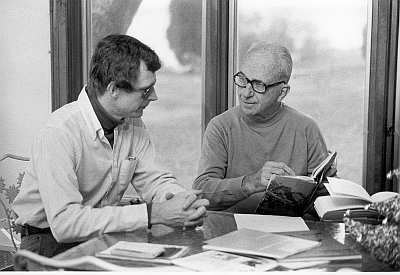
“Uys showed such a mastery and predilection for plotting that again and again he came up with dazzling ideas that again and again attracted my attention. I am no good at plotting, hold it to be almost an excrescence, and pay far too little attention to it, so that Uys's bold suggestions were often appreciated.
“He really was a remarkable man in his ability to visualize instantly and I rarely had to waste a moment explaining anything. Also, he had the capacity and willingness to catch an idea and run with it in his own direction, often proposing something so far from my intention that I was bedazzled. I judge he could plot six novels a year with intricate beauties; he should have been in G-2 in some complicated war situation.
"Never once did I say, 'So now we have this Englishman at the Mission Station in 1819. How does he get to the Orange River?' without his having nine or eleven possibilities, all good, all logical, all beautifully coordinated. Often I would say, 'too complicated for our boy,' or 'I doubt that our boy would go that far,' but just as often I would say, 'That might be just what he would do..'
"Once we broke away from his conception of a super-dramatic novel, at which he would have been excellent, he grasped immeidately and totally my concept of a novel which would unfold all the qualities of the Afrikaner heritage, and althrough he sometimes tooka dim view of that heritage,he was brilliant in bringing to my attenbtion aspects which I could not have though of by myself, even though I had done and was doing considerable work in the field."
"Every excerpt, every page you have written for my book shows that you are a writer with a superb use of the English language, a remarkable vocabulary and a very special turn of phrase…You unquestionably have the talent to write almost anything you direct your attention to. You are a great researcher, as your copious notes prior to our work sessions together indicated.
“And you know how to put words together most skillfully as your work on the manuscript proved. With such talents you stand a remarkably good chance in whatever you try. You have also, from what I gleaned in our conversations on the long walks, an acute sense of timeliness in subject matter. That's a rare combination; the most promising I've met with in years of talking with would-be writers."
Brazil – The Light at the End of the Long Tail
Top 10 Reasons Why Readers Like "Brazil"
Over the years, I've collected these personal notes from my readers. Some are from Brazilian immigrants in the United States, for whom Brazil brings their children an extraordinary understanding of the land of their heritage. Some are from people with a profound knowledge of our neighbor to the south. Some are from readers like Birdie Hope:
"I read your entire book aloud to my husband on a series of trips we made. --He drove, I read. -- We started in Mato Grosso, Brazil and finished somewhere in Kansas! The edition we read was an even 1,000 pages. Loved it! It's fabulous. Thanks for writing it."

My mind boggles as I think of Birdie and her husband trekking all the way from the Pantanal to Route 66.
I've posted a selection of letters from my readers on my website. Here's a list of the Top 10 reasons why they liked Brazil:
1. "Truly a Masterpiece - a fantastic journey through the centuries"
2. "A Brazilian Rite of Passage"
3. "A Truly Amazing Read"
4. "Brazil is a Classic"
5. "I feel more 'Brazilian’ after reading Brazil'"
6. "A Monumental Novel - As Great and Grand, as Michener's 'Source'"
7. "Brazil draws me as surely as the mystery of South America itself"
8. "I Am Mesmerized"
9. "Loved it! It's Fabulous!"
10. "A Beautiful Work! It’s gripping, easy to understand."
It is both humbling and heartwarming to know just how much Brazil has meant to those who have taken this literary journey to the heart and soul of a great nation.
How Our National Parks Saved a Lost Generation of America's Youth
“As long as you kept moving you were all right, but you were going nowhere,” recalls Jim Mitchell, who ran away from his Kenosha, Wisconsin home in winter 1933, when he was 17. “I remember the morning my Dad came home. 'I lost my job. I'm out of work,' he told mother. It was the first time I saw my father cry. Things went downhill. You lived off your relatives. You went to eat at grandma's and here and there until you hit rock bottom and went on relief. Everything closed in on me. I sat down and told myself, I'd lighten my parents' burden if I took off.

“The quickest and easiest way was to jump a train and go somewhere. We thought it was the magic carpet – the click of the rails – romance,” said Mitchell. Jim and a buddy Peter Lijinski – “Poke” – hopped freight trains across the Midwest. “You went on the road and exchanged one misery for another. You were always filthy and constantly hungry. You'd take whatever odd jobs you could. We did everything from mowing lawns to cleaning grease traps in restaurants. It was humiliating but sometimes you panhandled.
“Nothing was happening and there was no direction in your life. Sometimes you'd meet kids your age in town and start talking with them, I remember once I was cutting a lawn. I started talking to this perfectly nice girl and her mother called her away. Boy, that really hurt. I was as good as her or anyone else.
“I didn't want to live on the road. You had to do something with your life. You couldn't roam around like a damn dog eating out of garbage cans. That's about what you were, a damn dog roaming the road.”
Jim Mitchell and Poke typified the crisis of America's vagabond youth seen as so urgent and volatile by Franklin D. Roosevelt that on March 21, 1933, barely two weeks into his presidency, Roosevelt sent a message to Congress. It stated in part: “I propose to create a Civilian Conservation Corps to be used in simple work, not interfering with normal employment and confining itself to forestry, the prevention of soil erosion, flood control and similar projects. I estimate that 250,000 men can be given temporary employment by early summer.”

Before the close of his first month in office, FDR signed an act creating the Civilian Conservation Corps (CCC), in which unemployed and unmarried men between the ages of l8 and 25 were eligible to enroll. They were to be paid $30 a month, of which $25 was to be sent directly to their needy and dependent families.
The first camp was set up on April 17, 1933 -- just 12 days after the CCC was officially inaugurated. Two hundred CCC enrollees were trucked to “Camp Roosevelt” in the George Washington National Forest near Luray, Virginia to begin work under the supervision of the United States Forestry Service.
By early July, 250,000 young men were settled in 1,468 forest and park camps. They were supervised by 25,000 war veterans and 25,000 experienced woodsmen. In ten years, the CCC took two and a half million men from the ranks of the unemployed and put them to work planting 200,000,000 trees, building dams, fighting forest fires, clearing beaches and campgrounds.

At Lake City, Iowa, Mitchell and Poke ran into an army officer. They told him they were on the road and had just got work with a carnival. “That's no life for kids,” he said. “Why don't you join the CCC?”
Mitchell was inducted into Company 2616 stationed at Camp Norwood on the banks of the Wisconsin River, nine miles north of Merrill, Wisconsin.
“We were trucked from a railroad depot to our new home which consisted of a group of long, low buildings covered with tarpaper in a clearing in the pines. Little did we realize that this stark encampment was the haven thousands of boys like ourselves needed.
“There was a wonderful social mixture in the CCC. We lived 40 men to a barrack. Two bunks down there would be a farm kid who couldn’t read or write. If he got a letter from home, somebody read it to him. You could go up a couple more bunks and find a medical student who dropped out of the University of Wisconsin. Another boy’s father had an automobile dealership that went bust. Some kids were literally hoods from the cities.
“I found out what discipline was about. Captain Entringer who ran the camp held inspection
every morning. Your bunk had to be neat. You had to be able to bounce a quarter off your blanket. Your foot-locker had to be in a precise place. There had to be no dust on your shoes. If you failed inspection, when you got off work that day you would have extra duty. You’d work in the kitchen or chop wood until 10 o’clock.
“On a cold fall day in 1934, they sent our crew to work in a tamarack swamp. Our job was to drag 20-foot long tamarack logs out of the muck and mire of 500-year-old loon dung. The day started with our getting wet to our belt buckles and it never got any better. It was a messy, dirty business. We slogged back to camp that night bone-weary and whipped.
“As we passed the dispensary, Lt. Kuehl, the camp doctor, barked, 'You!' I looked at him and he nodded. 'Yes, you. Come here.'
“The last thing I wanted was a reaming from a shave-tail. I strutted over to him. ‘Yes, Sir,’ I said sullenly.
“He looked me over for a moment and then said in a concerned tone. 'Where are you working, son?' I told him.
“Our crew chief got a tongue-lashing for letting us work on the tamarack detail without hip boots. It was a solid lesson in comradeship and responsibility to your men. I remember thinking to myself, 'Thank God somebody cares about me.'”

Riding the rails in his early 20s, Texas-born Harry Keller occasionally found low-paying harvest jobs. Most of the time he had no work as he bummed his way around nine Western states. In 1933, Keller signed up for the Civilian Conservation Corps and was sent to a CCC camp in the Tonto Basin near Globe, Arizona.
Nearsighted but without glasses, Keller’s first assignment was as powder man on a dynamiting crew, though he had never worked with explosives before. His job was to fill drilled holes with dynamite and ready it for blasting. He got the hang of it quickly enough or he might have ended his CCC days then and there. Headaches caused by exposure to dynamite later resulted in his being transferred to a less hazardous area.
Re-enlisting in the CCC year after year, Keller strung telephone poles across the Tonto Basin, repaired roads, built fish dams, planted trees and fought forest fires. He eventually became head chef at the camp feeding 175 to 200 young men and youths.
“I’d never cooked in my life. I wrote home to my mother asking her to tell me how to prepare this and that,” recalled Keller. He rose to be Mess Sergeant, a position he held for more than three of his eight years in the CCC.
“I was scared and worried before I joined the corps. The CCC taught me responsibility and gave me confidence. Never again did I worry about how I would survive.”
Arthur Hunevan’s parents were in danger of losing their home when he went into the CCC in Northern California. His wages helped them make the payments on their house. Besides alleviating the financial burden on Wallace Horton’s widowed mother, his year in the CCC taught him to understand and work with other people. “I learned that the world did not owe me a living. If I wanted to get ahead, I would have to earn it, said Horton. The former CCC-er went on to become a U.S.A.F. electronics engineer, whose career earned him the Air Force’s highest civilian award.
Runaway Jan van Heé’s self-esteem was “down to ground zero,” when he enlisted in the CCC. “I felt I was no good, unwanted, rotten, dumb, stupid. No one cared for me and no one ever would,” said Van Heé. After six months in the corps, he was made foreman of a fire-fighting unit with six youths. When the fire season ended, he was promoted to a position in the ranger’s office. “I was getting pats on the back. ‘He’s doing a good job,’ my officers said. I began to feel that I was worth something.”
Franklin Roosevelt’s “Tree Army” marched to many different drumbeats. In a personal memoir, Ernest Amundsen recalled being sent to a “spike” camp at West Yellowstone. “We worked on forest service roads. A dump truck hauled loads of gravel. Left-handed boys had to shovel on the right hand side and right handers on the left side. The boss did this with whatever tools we were using. I learned to use a shovel, ax, saw, pick and other tools left-handed. I also learned not to drink whiskey like you drink beer, and how to play poker and how not to play poker.”
Darwood Drake and other North Dakotan farm boys found themselves posted to a CCC camp at Locke, a small community in the heart of the Ozarks 30 miles from Ft. Smith, Arkansas. “We had to get used to the Southern drawl, the slower way of living, the grits and corn pone. We saw poverty-stricken families in ramshackle places with livestock running in and out of the shacks.” In this unlikely locale, inspired by one of the North Dakotans who could tap dance. Drake joined nine comrades in working up a “routine” for the camp show. “None of us was less than 160 pounds and several weighed over 200 pounds. It was a sight to see 10 uncoordinated men jumping up and down trying to tap to ‘The Sidewalks of New York.”
Not every recruit found a haven in the CCC. Weldon Keele signed up in Utah after graduating from high school in May 1935. He was assigned to a camp in Wood Cross, Utah, where he reported in time for supper. “I didn’t know that you had to put your dishes in one place and your knife, fork and spoon in another place for washing. A big, burly guy from Kentucky who was doing the dishes called me a dumb son-of-a-bitch and wanted to beat me up. I didn’t like the guys from the East. They were too rough-talking for me. I went back to my bunk, gathered up my belongings and headed for home.”
Nineteen-year-old George de Mars had become totally discouraged working on a farm for $25 a month in the summer and $3 a month in winter. In February 1933 he left Minnesota in below zero weather and rode the rails for four months. He was looking for work, but could find only menial jobs and was worse off. “Franklin Roosevelt was my all-time hero when he introduced the CCCs. The corps took a multitude of young men off the road and kept them on the straight and narrow. The pay was not great, but we had good food and clothing and comrades,” said de Mars who served 30 months in the Minnesota CCC. “We were under military discipline. When World War II came, we made good soldiers.”
With 300,000 enrollees a year, the CCC provided a way of leaving the road for thousands of young men in their teens and early twenties. In 1936, Howard Oxley, Director of CCC Camp Education reported that the previous year the corps had found jobs in private industry for 135,000 boys, about one-fourth of the total number in the camps.

To Jim Mitchell, the CCC was to “the poor man’s West Point.”
“We learned everything a West Pointer learned about duty, honor and obligations and got thirty bucks a month in the bargain. The CCC shaped my life which had had no direction. Back home I’d had no role models to measure my life again. In the corps there were well-educated fellows whose goals had been interrupted. I wanted to be like them and knew I had to get an education to do so.
“When I went back to finish high school, I had classmates of 13 who were pulling in A’s while I was struggling to get a C. I didn’t let it bother me because I wanted to get a hold on my life. I wanted to go to college though at the time I didn’t have a prayer. I didn’t let that bother me either. I knew I would get there somehow and I did.”– Jim Mitchell went on to study at Ripon
College, Wisconsin. After service in World War II, the GI Bill enabled him to earn a Master’s Degree from the University of Wisconsin. His professional life was spent in producing promotional films for the auto industry.
“The youth of those fateful years were taken from the steamy streets of cities in economic turmoil and from our ravaged farmlands. In the CCC camps we learned values that gave meaning to our lives. On the road you lived for yourself and to hell with everyone else. In the CCC you not only learned to live with other guys, you learned to work as a team. You learned to do a job and do it well. It gave you confidence when you started to become accepted by your peers and to fit in with them.
“You had three square meals a day with good food and a good place to sleep. On the road you spent all your time wondering about whether you were going to eat. If you worked it wasn’t useful work but just for food. To this day I can go and see parks that we built in the CCC. I can see trees that we planted. It’s a living legacy. You didn’t have a living legacy on the road.”
The story of Jim Mitchell and the desperate young men who joined the ranks of Franklin Roosevelt's “Tree Army” is recounted in Riding the Rails: Teenagers on the Move during the Great Depression by Errol Lincoln Uys (published by Routledge, New York.)
Commentopia -- The Best Readers' Comments from Top News Sources on the Web
Thousands of comments read and curated daily for the most original, insightful and informative readers' opinions from top news sites and blogs.
Few things illustrate the media revolution underway more dramatically than the notations at the foot of Huffington Post articles: “comments (2,479.)” Right-wing mega-blogs rack up equally formidable comment tallies from their audiences. Newspapers, relatively latecomers in offering website forums, host hundreds of posts daily on wide-ranging topics.
Contrast this explosion of readers' opinions with “Letters to the Editor” pages; once print media's exclusive avenue for expressing views on its content. A daily paper will select ten or so letters for publication. One yardstick of the past suggested that for every newspaper reader taking the trouble to pen a missive, ten others wanted to do so but hesitated. – Sitting at their keyboards, Huffington Post's followers typed a staggering 97,660 comments on Iran's election.
On the positive side, these forums are an invitation to engage in what the New York Times describes as “interesting and thoughtful comments that represent a range of views.” Intelligent discussion by informed contributors can explain context, promote frank and candid debate, and sharpen public comprehension.
For print media battling to bridge the digital divide, a lively comment forum is vital to building a dynamic online community.
In June, 2009, newspaper sites attracted more than 70 million visitors, more than one-third of all Internet users, according to Nielsen Online. The average news site visitor devoted a total of 38 minutes 24 seconds during the month; Facebook users, by contrast, lingered 4 hours, 39 minutes on average. Even as newspapers debate pay-walls or micro pay-per-view options for premium content, the forums on the Wall Street Journal's subscriber-based website remain open to all comers.
The downside of comment forums is the creation of platforms hijacked by hatemongers; threads filled with outright lies and slanderous falsehoods; skewed political rants from both Left and Right; bitter diatribes and racist attacks. Such forums deteriorate to the low, vulgar level of marginalized chat-rooms of the 80s and 90s, with fair and reasonable discourse drowned out by crass insults.
Comment moderation varies from site to site, with major news organizations like the New York Times and Wall Street Journal employing staff moderators, while other sites rely on readers to flag abusive content.
Commentopia's editors scan thousands of comments daily seeking topical items of enduring interest and lasting value. The forums are the voice of the people, a free expression of opinion on stories and themes that matter to them, a contribution to collective understanding of all sides of an issue. Three key criteria guide Commentopia's curation: objectivity, credibility, and fair and balanced comment that speaks for itself.
A Novel of America on the Back Burner
commentopia brings you the best comments curated from the top news sources of the web.
Thousands of readers' comments are sifted for intelligent, thoughtful and on point discourse of lasting interest. I hope you'll become a regular visitor to the site that is updated throughout the day.
Since beginning work on A Novel of America, my vision of the project has gone beyond the idea of simply writing a manuscript online. Words are the core, of course, but I believe web-based storytelling must employ all available facets: video, sound, images, interactive media. Here are three excellent examples of “novel” innovations on the web:
The Kindle edition of my book, Brazil, has an Illustrated Guide linked to each chapter and to my travel journals that reflects the kind of cross-platform on which A Novel of America should evolve when time permits a return to the work.
In the future, too, I will seek to make this a collaborative effort with other creative talents well-versed in the artistry of the web.