Showing posts with label historical fiction. Show all posts

Landing in Salvador - Princess Paraguaçu, Two Abandonados, a Cockroach and a Prayer

Brazil - The Making of a Novel - Part 9
 
The Journey; Salvador, Bahia, July 7 - July 14
 
(Landed at 3.40 a.m.) Early morning arrivals are disastrous, especially when coupled with congress of six thousand medicos starting tomorrow. Good-intentioned cab driver drops me at sea front. Gray sky, showers, pre-dawn humidity. First hotel full, second $50 a night. Find myself walking back toward Centro after stop for Coke at kiosk where my “jacket Americano” is main interest. Also my $1 note for Coke. Scrawny woman creeping in and out of shadows to beg a cigaretta.
 
Finally made it via VW taxi to “Hotel Imperial” in Centro at 6.15 and get room at 900 cruzeiros (91cr. to $1.) A benign fleapit. Shocking pink walls. Cockroach at eye level when I wake five hours later. Noise. Deadly shower system (loose electric wires dangling from heating unit) but probably a lot better than what lies ahead and able to keep me within my $30-a-day budget. (And, as usual, contradicting LdJ's observations on “horribly expensive Brazil.”) I had perfectly adequate dinner of chicken, feijoas, rice, salad, beer and tip for 330cr. ($3.50)
 
Salvador Brazil harborFirst impressions of Salvador come from the large black population. Were this not Brazil, you could expect to awake in a West African seafront town.
 
First encounter with abandonados particularly memorable in visage of two little girls who'd steal many a U.S. heart. Sad if one considers all the implications beyond the empty soda tin thrust toward you but yet not pathetic.
 
There was a liveliness, a vivacity, as in their response when a customer at the snack bar ordered a glass of water which he tossed over them! In contrast, a young boy who was approached stopped to talk with the prettiest of the two girls, gave her a fond clasp on her shoulder - no money - before going on his way.
 
The urgency of getting down to serious work after the Portuguese experience impresses upon me. By 4.30 I've spent two and half hours with the Bahia information people who seem much more on the ball. Arrange to spend day with Henriques Caldeira. I'm impressed with the “sense of history” shown by these first contacts: Dona Linda Conde, who spoke of a plantation that's been in her family for 250 years; Henry who is Jewish and traces his ancestry back to the Dutch/Portuguese connection and Dona Gildene who is a great-great-great + granddaughter of Paraguaçu, the Indian princess who married Caramuru. Dona Gildene also has Dutch ancestry. (Must check influence of Dutch influence down here.)
 
This first brief foray suggests Bahia is font of Brazilian culture. Am also beginning to realize importance of maintaining this journal to remember all that comes at me and to have this “self-communication” each evening. This self-imposed silence for one so garrulous as me is unusual!
 
I go to bed quietly hopeful and prayerful. Have, as I did in Portugal with the likes of Serrão, prepared a list of “interests.” Pray God that they come up to expectations. I close Day One with a sense of cautious optimism.
 
Princess Paraguaçu and Caramuru


The Epic of Brazil on Amazon Kindle


“Through the lives of two powerful families, Brazil depicts five turbulent centuries in the history of a remarkable land. From colony to kingdom, from empire to nation, Brazil is filled with memorable people living through one of the great adventures in human history.”

A masterpiece! Brazil has the feel of an  enchanted virgin forest, a totally new and original world for the reader-explorer to discover.  L' Express, Paris

Pulsing with vigor, this is a vast novel to tell the story of a vast country. Uys recreates history almost entirely "at ground level," through the eyes and actions of an awesome cast of characters.  Publishers Weekly

Uys has accomplished what no Brazilian author from José de Alencar to Jorge Amado was able to do. He is the first outsider with the total honesty and sympathy to write our national epic in all its decisive episodes. Descriptions like those of the war with Paraguay are unsurpassed in our literature and evoke the great passages of War and Peace Wilson Martins, Jornal do Brasil

The Kindle edition comes with a free Illustrated Guide to the Novel.
 

Brazil on Twitter - Telling the Brazilian National Epic in 25,000 Tweets

Brazil is the first country to have its story told on Twitter in a saga spanning 500 years in 140-character episodes!

I draw on my acclaimed historical novel, Brazil, for this staggering task. My "Twitter Edition" is tweeted live for 10,000 indefatigable followers of the epic which opens with the Tupiniquin Indians in May 1491 and continues to the 21st century.

Brazil on Twitter couldn't be more different from my original manuscript. A South African-born author now living in Boston, I spent five years on the writing of my book about Brazil, a land that captivated me since childhood. My research included a 15,000-mile journey in Brazil, almost exclusively by bus to get a feel for the country.

My travels took me into the sertão, the arid backlands of the Northeast and to the Casas Grandes of coastal Pernambuco. I voyaged the Amazon from Belém to Manaus and rode by bus down to southernmost Rondônia. I followed the route of the bandeirantes, the Brazilian pathfinders, west of São Paulo and roamed the highlands of Minas Gerais.

The writing of Brazil took five years. Like my fictional hero, Amador Flóres da Silva, I knew periods of utter loneliness and fear; times when I felt the caatinga closing in on me. Always, I broke through the barrier. I never lost the will to understand the Brazilian ˜thing."

When I sat down to write my original manuscript, I did so the old-fashioned way by hand. It was a staggering 2,454 pages penned on unlined scribbling blocks and later typed up on a 1930s Remington Royal with a draft of 756,200 words! A typewriter bought on a yard sale for $1. The first edition of Brazil was pared down to 1,000 pages and published by Simon and Schuster.


The newest edition, with an afterword that brings the story to the 21st century, is on Amazon Kindle and also in Print (personally signed copies available.)

What I love about Twitter is the ability to reach a new worldwide audience “ one tweet at a time!" I post 20 to 40 tweets a session, numbered, and in self-contained excerpts.

In its long form, Brazil, has won accolades from reviewers and readers across the globe:

"Uys has accomplished what no Brazilian author from José de Alencar to Jorge Amado was able to do. He is the first outsider with the total honesty and sympathy to write our national epic in all its decisive episodes.“ -- Professor Wilson Martins, Jornal do Brasil.

"A Masterpiece! Brazil has the look and feel of an enchanted virgin forest, a totally new and original world for the reader-explorer to discover." -- L'Express, Paris

"Pulsing with vigor, this is a vast novel to tell the story of a vast country. Uys recreates history through the eyes and actions of an awesome cast of characters seen at 'ground level." - Publishers Weekly.

"Uys has interwoven five centuries of Brazilian history and generations of two fictional families into a massive, richly detailed novel, Michenerian in sweep and scope, informative and intriguing.  Uys has a sense of pace and an eye for detail that rarely fail him. "-- Washington Post

In the wide world of Twitter, @BrazilANovel offers a totally new and original way to discover Brazil, a great nation and its people, one tweet at a time.

Tiny Puffs of Cloud That Fell to the End of the Earth

Brazil - The Making of a Novel - Part 5
 
Before leaving Portugal for Brazil, I prepared a list of objectives sent in advance to potential contacts in Brazil's cultural and educational ministries, historians and others whose names had been suggested by sources I'd met in Portugal:
 
Notes on Research Project: Brazil 
 
My novel is historical and a major part of my work can be
accomplished through a study of published sources.
 
No matter how assiduously this is undertaken, such bookwork
cannot offer on location observation with its inestimable
value in bringing comprehension and adding reality to your
perspective. The following notes, more or less in line
with my envisaged chapter structure, indicate the kind of
material and experience I am seeking.
 
Creative people are not supposed to be as formal as this,
but with so vast a project in mind  I have to adopt some
kind of organized strategy for the research stage
or I'll never put it all together.
 
1. Rain forest
 
I want to describe, in detail, a single acre —
"God's Little Acre," in a way — before mankind's
arrival. I need to speak with experts at a forest research
station (outside Belém?), who can explain, in simplest
terms, the symbiosis of the forest, its creation and
the miraculous web of life that ensures its survival.
 
I need a geologist to outline the creation of the Amazon
basin and the forces that shaped the sub-continent
as we know it today. A zoologist to tell me about
the animal life of the virgin forest. And a sociologist
who can expound on "man and the forest," the forest's
effect on man over the centuries, both indigenous
and immigrant. (Charles Wagley, An Introduction to Brazil,
has some pertinent remarks on this theme.)
[READ MORE]


Besides these research objectives, I offered a glimpse of my story lines, enough to grasp
my plans for the book and more specific research needs:
 
Notes on Research Project: Brazil
 
“While I am aware that the role of the rain forest
in Brazilian history should not be over-emphasized,
I want to open the book with a succinct evocation
of the lifecycle of an acre of virgin rain forest;
its creation and existence before the advent of mankind.
 
“The first dwellers in the forest, the Indians, are seen
in the period 1492-1500, eight years leading up to the
arrival of Cabral's fleet. Emphasis is placed on
the Tupi-Guarani branch and, in particular, a Tupinamba
and a Tupiniquin group. While a novelistic technique
carries the story forward, I am equally concerned
with a sympathetic account of their lifestyle and its
value-role in the formation of Brazilian society.
 
“After showing Cabral's landfall, my focus turns to
the Portuguese trading empire in the East, stressing
Goa and Ormuz, in the period 1506 — 1516 to give
the reader a concept of the men and women
who first settled Brazil and their heritage.
 
[READ MORE]
                        
 
These gleanings from my outline and in-depth reading and research were intended to convince those whose help I sought that I was involved in a serious project of which I already had more than a working grasp. A breathtaking and formidable task but which, after my two years with James Michener on The Covenant, I had every confidence of accomplishing.
 
I prepared a draft itinerary that would allow me to touch base with all the important locations in the novel, an itinerary clearly open to revision as priorities demanded.


Draft itinerary for visit to Brazil: July to October 1981

 
July 2                         Arrive Recife from Lisbon
July 3   - 7                  Recife/Olinda
July 8   - 12                Recife/Olinda area - "sugar plantation"
July 13  - 14               To Canudos - Pernambuco 'backlands' en route
July 15  - 16               Canudos
July 17  - 18               Salqueiro - Belém (surface)
July 19  - 21               Belém (Amazon forest research station etc.)
July 22                       Belém - Manaus (air)
July 23  - 26              Manaus
July 27  - 29              Manaus - Porto Velho (Madeira River?)
July 20  - Aug 8        Porto Velho - Madeira-Mamore railroad/
                                  Aripuana to Alta Floresta/ environs of Rio
                                  Roosevelt etc.
Aug 9                        Porto Velho - Brasilia (air)
Aug 10   - Aug 15      Brasília
Aug 16   - Aug 22      Brasília - Salvador via Sáo Francisco area
Aug 23   - Aug 29      Salvador
Aug 30                       To Porto Seguro
Aug 31   - Sept l         Porto Seguro - Ouro Preto
Sept 2   - 3                  Ouro Preto
Sept 4   - 10                Rio de Janeiro (lst visit)
Sept 11  - 15               São Paulo
Sept 16  - 24               São Paulo ( on coffee fazenda)
Sept 21                       São Paulo to Asuncion (air)
Sept 22  - 24              Asuncion, Paraguay
Sept 25  - Oct 3         Asuncion - Humaíta to Missiones area etc.
Oct 3    - Oct 17         Rio de Janeiro for consultations with local
                                  Historians/contacts
Oct 18                        Return to New York.
                                          
I was to begin my trip at Salvador, the Mother City, the best possible start to a journey in search of the “real Brazil,” as people in the south refer to Bahia. From Salvador I went to Porto Seguro and Cabrália, walking along the beaches and broad bluffs that are the setting for the opening of my book along the same beach where I saw the young Tupiniquin, Aruanã, at the water's edge on a day in 1500.
Porto Seguro,  Brazil
                
      Tiny puffs of cloud had fallen to the end of the earth. Four... five...six were bunched together just above the horizon, and others were coming to join them. Otherwise the sky was perfectly clear, its blue expanse streaked with the blazing color of the lowering sun.
 
     He made a hesitant progress toward the water, squinting into the distance at the strange clouds. But even as he did so and perplexed as he was, he began to see that his first impression had been wrong. Very quickly now the swiftest clouds lifted above the water and he saw a darker line. There was a flash of understanding: Here were great canoes coming from the end of the earth.
 
     Aruanã watched as they came closer. The sun was gone behind the trees, and he found it difficult to discern the craft, but he stood rooted a while longer before he realized that he must hasten to the village and tell what he had seen. This made him gaze at the horizon again, to be absolutely certain, for it was a fantastic discovery for a man who had gone to seek no more than shells for First Child. They were there, darkening images now, these canoes that had come from the end of the earth.

Landing place of Pedro Alváres Cabral, Brazil, 1500
 

Why Choose Brazil as the Subject of an Epic Novel?

BRAZIL -- The Making of a Novel - Part 2
 
Why choose Brazil as my subject? And why on such an immense scale? I've always believed one should make no small dreams for the results will be commensurate. During our time together, James Michener and I spoke about places that would lend themselves to treatment in epic novels. He mentioned Alaska and the Caribbean, both of which would become locales for Michener books. I suggested Brazil.
 
The more I began to think of Brazil, the more reasons I found for wanting to write about the country. My very ignorance prompted question after question, and when I began to look for answers, I quickly sensed a tremendous story that hadn't been told to the North American public. As an outsider to both nations, I had a singular vantage point unbridled with innate prejudices and chauvinism.
 
Among other compelling reasons for choosing Brazil, not the least was my having just spent two years delving exhaustively into the history of my birthplace. Broadly-speaking, the relations between the races in South Africa and Brazil couldn't have been more different in the 1980s: how, when, why, I wanted to know, did the two nations take such radically different paths? This wasn't something to include in the book I envisaged about Brazil but it gave me a base-line to work from in considering the dynamics of Brazilian society. In Africa, I also traveled widely in Mozambique and Angola, gaining insights into the Portuguese, their history and way of life, a valuable introduction to the colonizers of Brazil.
 
On January 5, 1981, the first working day of the year, I woke up at the usual time when I would leave for the Digest's offices in Chappaqua. This day there was no Digest, only the vast unknown in Brazil and with my future.
 
During the next three months I haunted libraries and second-hand bookstores in New York. I wasn't selective but read anything I came across related to Portugal and Brazil, anything but fiction. In plotting so vast a story one has to take care not to lock into the imagination of others and inadvertently borrowing from their works, a pitfall Michener drew my attention to when we were working on The Covenant.
 
I read hundreds of books and articles on my library forays, not only on my initial three-month plunge
into Brazil but as I went along. A small sampling of my reading list includes some of the classic works on Brazil and Portugal, both contemporary and historic:


The Mansions and the Shanties, Gilberto Freyre  
The Masters and the Slaves, Gilberto Freyre
Order and Progress, Gilberto Freyre  
New World in the Tropics, Gilberto Freyre
Bandeirantes and Pioneers, Vianna Moog
History of Portugal, Antonio H. de Oliveira Marques
Portuguese Seaborne Empire, Charles R. Boxer
Portugal and Brazil, Harold Livermore and W.J. Entwhistle
Colonial Background of Modern Brazil, Caio Prado, Jr.
The Brazilians, José Honorio Rodrigues
Latin America, Preston E. James
History of Brazil, Andrew Grant, 1809
History of Brazil, E. Bradford Burns
From Barter to Slavery, Portuguese and Indians, 1500-1800, A. Marchant
Captains of Brazil, Elaine Sanceau
True History of His Captivity, Hans Staden
Discovery of the Amazon, according to account of Fr. Gaspar de Carvajal
The Histories of Brazil, Pero de Magalhaes, trs. John B. Stetson
Hakluyt, the Principal Navigations, Volume XI
A Treatise of Brazil, Padre Fernão de Cardim in Purchas, his Pilgrims XVI
Dutch in Brazil, 1624-1654, Charles R. Boxer
Golden Age of Brazil, 1695-1750 , Charles R. Boxer
Salvador de Sa and the Struggle for Brazil and Angola, Charles R. Boxer
Brazil, Portrait of Half a Continent, T. Lynn Smith
Apostle of Brazil: Padre João Anchieta, Helen G. Dominian
Jews in Colonial Brazil, Arnold Wiznitzer
The Negro in Brazil, Arthur Ramos trs. Richard Pattee
Neither Slave nor Free, David W. Cohen and Jack P. Greene
African Religions of Brazil, Roger Bastide
Brazilian Culture, Fernando de Azevedo, trs. William R. Crawford
Evolution of Brazil, Manoel de Oliveira Lima
Rebellion in the Backlands, Euclides da Cunha
 
One of my early sources was the three volume History of Brazil written by the English romantic poet, Robert Southey, between 1810 and 1819, considered the first comprehensive history of colonial Brazil. I pored over Southey's thousand-plus pages in awe of his achievement, the closest he ever came to Brazil was among the volumes in the library of his uncle, Reverend Herbert Hill, chaplain to the English Factory at Lisbon. I would have the opportunity to visit Brazil and carried Southey with in my thoughts, an inspiration to another outsider making a literary journey of epic proportions. Southey showed that it could be done.


Inside Brazil - Take A Magical Journey Beyond The Clichés and Stereotypes


"A masterpiece! Brazil has the look and feel of an enchanted virgin forest, a totally new and original world for the reader-explorer to discover. -- L'Express, Paris

Brazil is a spellbinding saga of two powerful families that depicts five turbulent centuries in the history of a remarkable land. From colony to kingdom, from empire to nation, Brazil is filled with memorable people living through one of the great adventures in human history.

When writer Errol Lincoln Uys sat down to tell the story of Brazil, he had a key objective in mind: Avoid the stereotypical images of Brazil and its people.

"I rejoice in Carnival, samba, soccer," says Boston-based Uys (pronounced 'Ace'). "Like so many gringos, I knew little else about Brazil. In writing my novel, I discovered one of the great adventures in human history -- the story of an extraordinary people who built the dynamic nation we see today."

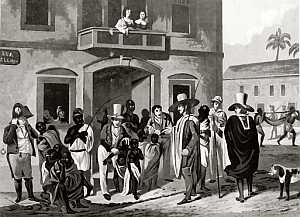
Two powerful families drive the story alongside an awesome array of characters, fictional and real. The Cavalcantis are among the original settlers and establish the classic Brazilian plantation -- vast, powerful, built with slave labor. The da Silvas represent the second element in both contemporary and historical Brazil: pathfinders and prospectors. For generations, these adventurers have set their eyes on El Dorado, which they ultimately find in a coffee fortune at Sāo Paulo.

Brazil is an intensely human story, brutal and violent, tender and passionate. Perilous explorations through the Brazilian wilderness . . . the perpetual clash of pioneer and native, visionary and fortune hunter, master and slave, zealot and exploiter . . . the thunder of war on land and sea as European powers and South American nations pursue their territorial conquests... the triumphs and tragedies of a people who built a nation covering half the South American continent, all are here in one spell-binding saga.

Just how successful Errol Lincoln Uys is in capturing the Brazilian epic is best judged by what Brazilian reviewers and readers say about Uys’s 800-page masterpiece devoted to their country.

Brazil is a classic which will be enjoyed by many in the years to come.” — Agenor Soares dos Santos

“Brazil is a country of enormous contrasts and you had great insight in reflecting such differences in your book through the lives of two fictional families, one from the north and one from the south. When I read your book those feelings I had about the contrasting reality we face daily in Brazil were translated into words. I felt that a puzzle was finally put into place. I hope that writing this book has given you as much pleasure as I had in reading it. “ — Maria Pereira de Queiroz Brandão Teixeira

“Your book gave me a completely new way of viewing Brazilian and Portuguese history. Suddenly everything seemed clear: The raw truthfulness that was the reality of those times and which never comes across so clearly or vividly in history books. Truly, Brazil is a masterpiece!” – Vasco Cartó

“A beautiful work! It took more than a month to read your book, but I enjoyed every moment. It's one of the most solid researches I've seen covering five centuries of Brazil's multi-faceted history. The story line is gripping, easy to understand. My sincere congratulations. “ — Professor Max Justo Guedes

Brazil is a monumental novel. It shows the juxtaposition of sensual/brutal Brazil...It is amazingly on target not only in the historical sense but insightful for the complex modern Brazil, principally the all-important extended family. A theme vividly illustrated in the first chapters and carried throughout the novel.” — Edson Nery da Fonseca

“I am Brazilian but have lived in the United States since the age of two. After reading your novel, I feel I can regain the culture that I lost — I feel more Brazilian! I don't believe I would ever have felt this strongly about my people if I hadn't read your book.” — Moises A. dos Santos

Says Wilson Martins, one of Brazil’s most eminent literary critics: “Errol Lincoln Uys is the first to write our national epic in all its decisive episodes – the first outsider to see Brazil with total honesty and sympathy. Descriptions like those of the war with Paraguay are unsurpassed in our literature and evoke the grand passages of War and Peace.”

"A masterpiece! Brazil has the look and feel of an enchanted virgin forest, a totally new and original world for the reader-explorer to discover. -- L'Express, Paris

"Pulsing with vigor, this is a vast novel to tell the story of a vast country. Uys depicts Brazil's evolution from colony to empire to republic. Lacing the tale together are two families: the Cavalcantis, planters and slave owners; and representing another fundamental social stream, the da Silvas, prospectors, adventurers, seekers of El Dorado." Publishers Weekly

"No one before knew how to bring to life Brazil and her history. Uys's characters are brilliant and colorful, combining elements of the best swashbuckler with those worthy of deepest reflection. Most stunning is that it took a South African, now a naturalized American, to evoke so perfectly the grand but interrupted dream that is Brazil." -- Le Figaro, Paris

What better way for the reader-explorer of an epic as vast as Brazil to discover a totally new and original world! A great summer read!

FREE ONLINE EXTRAS

AN ILLUSTRATED GUIDE TO BRAZIL, THE NOVEL – WITH 300 IMAGES AND MAPS


AUTHOR’S JOURNAL FROM A FOUR-MONTH, 15,000-MILE TREK FROM THE AMAZON JUNGLE TO THE SOUTH OF BRAZIL


THE MAKING OF A NOVEL, WRITER’S GUIDE TO THE AUTHOR’S FIVE-YEAR QUEST FOR BRAZIL

Brazil – The Light at the End of the Long Tail


It has been 25 years since my 1,000-page epic novel Brazil rolled off the presses. A best-seller in Europe and in South America, Brazil was orphaned in the United States when its editor left Simon and Schuster only two months before its publication in April, 1986.
Six weeks after publication I was told, "Brazil didn’t take off." I had one press interview and one radio interview before my book vanished from local shelves.
In France, critics hailed the novel as a "masterpiece," a first printing of 14,000 copies sold out in three days, and the book became a summer blockbuster. It went on to sell over 400,000 copies in France, the United Kingdom, Germany, Holland, Israel and Brazil.
I was buoyed as much by my international sales figures as by the words of eminent Brazilian literary critic, Wilson Martins, who wrote in the prestigious Jornal do Brasil:
“Uys has accomplished what no Brazilian author from José de Alencar to João Ubaldo Ribeiro, as well as others including Jorge Amado and Bernardo Guimarães was able to do. He is the first to write our national epic in all its truly decisive moments.

“Uys is the first to have the talent required for the task, to see us with total honesty and sympathy, the first to understand Brazil as an imaginary creation, coherent in its apparent inconsistencies, organic in its historic development. Descriptions like those of the war with Paraguay are unsurpassed in our literature and evoke the great passages of War and Peace.”

French reviewers were similarly enthusiastic about my work: A masterpiece! Brazil has the look and feel of an enchanted virgin forest, a totally new and original world for the reader-explorer to discover,” crowed L'Express, Paris. “No one before knew how to bring to life Brazil and her history. Uys's characters are brilliant and colorful, combining elements of the best swashbuckler with those worthy of deepest reflection. Most stunning is that it took a South African, now a naturalized American, to evoke so perfectly the grand but interrupted dream that is Brazil,” lauded Le Figaro.


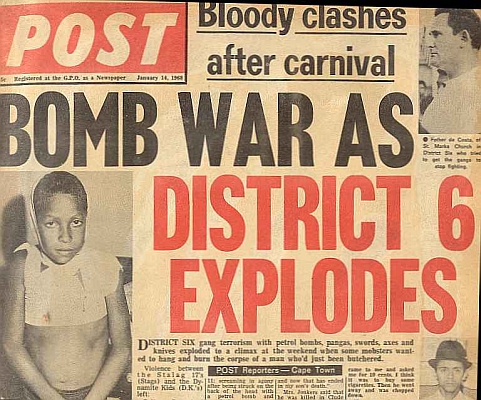
I began my writing career as a newspaperman on the Johannesburg Star and at the helm of the Cape edition of Post, then the country’s biggest weekly publication serving its African and mixed-race population. Following a stint in London, I became Editor-in-Chief of Reader’s Digest in South Africa. In 1977, I emigrated to the United States to work at the magazine’s international headquarters.
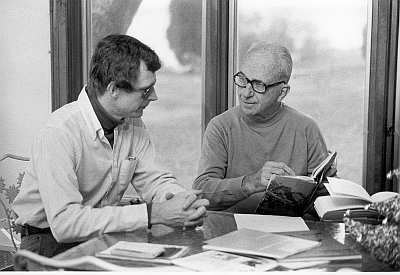
I met the American author James A. Michener through my work at the Digest and became assistant and researcher for Michener’s South African saga, The Covenant. Commenting on our two-year collaboration, Stephen J. May, Michener’s most recent biographer, concluded: “Michener committed a scarlet literary crime and used his celebrated influence in publishing to get away with it." – The affair is chronicled in an extensive literary archive on my website.

"The road will always be longer and harder for some of us," Michener told me. Controversial as our work on the South African book was, the experience convinced me that I could go out and dedicate myself to writing Brazil, as grand a theme as any that Michener undertook.
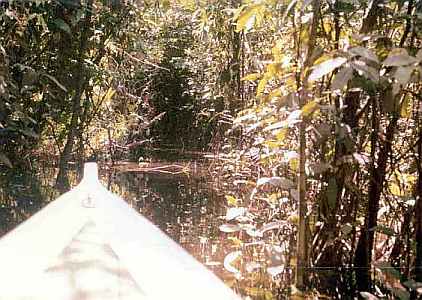
I spent five years’ time on the writing of Brazil. I devoted a year to my primary research, including a 15,000-mile trek through Brazil, almost entirely by bus in order to get a feel for the vast country and its people at ground level. My journey took me into the Sertão, the arid backlands of the Northeast, and to the Casas Grandes of coastal Pernambuco. I voyaged the Amazon River from Belém to Manuas and explored southernmost Rondônia. I roamed the highlands of Minas Gerais and followed the route of the bandeirantes, the Brazilian pathfinders, from São Paulo to the south.

I returned to the United States at the end of October, 1981 to begin what would become a 750,000-word manuscript written entirely by hand. It took a further four years to complete my task seeking a vision of the Brazilian El Dorado, not beyond the next hill or the river ahead but deep within the soul.
Like my fictional hero, the bandeirante Amador Florés da Silva, I knew periods of utter loneliness and fear, times when I felt the sertão closing in on me but always, I broke through the barrier. I never lost the will to understand the Brazilian genius.
I needed to call on the same steely resolve after seeing my work founder in the United States market. Despite Brazil’s overseas triumph, my follow-up book proposals (including an epic on Mexico) were submitted to no avail. I was more successful with my non-fiction efforts, publishing Riding the Rails: Teenagers on the Move during the Great Depression, a companion volume to the Peabody Award-winning documentary made by Michael Uys and Lexy Lovell, my son and daughter-in-law.

If my spirits ever sank, I had only to re-read Wilson Martins’s review of Brazil. -- Professor Martins truly understood the scope and nuances of my work. As time passed, many other readers who stumbled across the book sent me their own appreciations of Brazil.
“I don’t believe I would ever have felt this strongly about my people if I hadn’t read your book – I feel more Brazilian!” wrote Moises dos Santos, a Brazilian living in the United States. Birdie Hope effused: “I read your entire book aloud to my husband on a series of trips we made — he drove as I read. We started in Mato Grosso, Brazil and finished somewhere in Kansas! The edition we read was an even 1,000 pages. Loved it! It's fabulous! Congratulations for writing it.”
In 2000, I signed a reprint agreement with Silver Spring Press, a small publisher in Connecticut. I added an afterword bringing the story up to Brazil’s 500th anniversary celebration. Seven years later, my French publisher also issued a new edition of Brazil (La Forteresse Verte.)
Brazil was on the "long tail" at Amazon riding on that river sea with its vast schools of customers. Occasionally, sales of the new edition and secondhand copies sent Brazil rippling upward from the tip of the tail to somewhere in the fat middle. It was enough to satisfy a passionate author that someone, somewhere was dipping into his book. This encouraged me to keep paddling, no matter the current.
Then came Kindle, and for Brazil, a totally new world opened up. Having fought so long and hard for my masterpiece, I was ready for this new challenge. I took three decisive steps to launch the e-book, producing:
·        Kindle Illustrated Guide to Brazil

Linked to the e-text is a unique and free online guide with more than 200 images and maps, providing an indispensable companion on a fictional journey through five hundred years of Brazilian history. Captions drawn from the narrative enhance the reader's sense of immersion in time and place. The novel guide is also interwoven with the author’s original Brazilian journal and working notes.

·        Errol Lincoln Uys – A Writer’s Website


A wide-ranging personal website sharing the author’s archives, journals and working notes. The Making of Brazil and Michener’s Secret Covenant offer meticulously documented and intriguing insights into what went into the writing of these two books, from conceptual outline to final printed manuscript.

·        Twitter Edition of Brazil


I am also tweeting my 340,000-word book in 140 (or fewer) - character tweets for thousands of followers. Brazil is the first huge epic to be micro-blogged on Twitter, each tiny “episode” contributing to daily installments of 20 to 50 tweets. The novel’s Twitter handle is @BrazilANovel


The spectacular rise of the nation of Brazil over the past two decades couldn’t be timelier for me, as events like the 2014 World Cup and the 2016 Summer Olympics loom on the horizon. Twenty-five years ago, people made light of ‘'Brazil, land of the future and which always will be." This is no longer so today, as Brazil takes its place among emergent nations.
The timing for a big book on Brazil is perfect. Brazil is ranked No 1 on Kindle’s Brazilian-related books, the e-book’s success driving strong sales of the print edition.
If I’ve one thing to be thankful for – and there are many – it’s that I never stopped believing passionately in Brazil.