Showing posts with label Amazon. Show all posts
Brazil - A writer in search of the heart and soul of a great nation
I searched for the story of Brazil for five years, a literary pathfinder wandering in quest of the untold saga of the Brazilians and their epic history.
In these pages, I share my mighty journey of twenty thousand kilometers across the length and breadth of Brazil in 1981. I traveled through the heart of a nation in which the flame of freedom was newly lit after years of military dictatorship, the journal I kept colored by the voices and emotions of the era.
I explore the exhaustive processes that go into the making of a novel with a first draft of three-quarters of million words written in the old-fashioned way, by hand. I reveal the early genesis of my ideas for plot lines and characters, the detailed planning of my outline.
Of all the accolades a writer could hope for at the end of an epic work like Brazil none brought more joy than a simple question asked by the famed Brazilian historian and sociologist Gilberto Freyre.
"I should like to know if Uys had an unpublished jornal intime of a Brazilian family?"
There was no private journal, just the will to understand the Brazilian "thing" and a passion for writing and storytelling, which lies at the heart of every good novel.
Brazil - The epic of a great nation
The Burning Forest: Eyes on the Invasion of the Amazon
Brazil - The Making of a Novel - Part 31
Traveling from Manaus to Porto Velho again underlined the poor attempt at “conquering” the forest — the pathetic little farms alongside the road, the road itself tarred but in a state of disrepair. Almost like traveling on a dirt road, the bus swerving from one side to the other to avoid potholes and sections of the road that have completely degraded.
Atmosphere is pioneer, perhaps no better typified as in roadside “restaurants” - crude, wooden affairs catering to buses and truckers, serving one or two dishes only, great piles of food, rice, spaghetti, farina, chicken or beef, and stocked with only bare essentials.
Found sight of smoldering embers of destroyed forest beside road disturbing; nothing seen thus far has convinced me settlers know what they're doing.
As one informant said: they clear thousands of hectares adjoining the forest for cacão plantation and introduce cacão trees. What they ignore is forest's own defense mechanism:
Will it introduce new species of insect or disease to fight this invasion of its territory?
I like this concept of forest as a separate, living entity existing by and for itself, something surrealistic, but need to see it as such to reflect on its relationship with man.
In a small town like Porto Velho, you cannot help noticing excessive number of government organizations. In the downtown area virtually every street has its EMBRATEL, INCRA, INDECO, SUDENE etc - endless offices of functionaries all aiming at one or another type of disinvolvemente. (A strange word to my ears, for translated it means development; having seen some of these functionaries in action you wonder just how much "disinvolvement" gets done.)
At last, the Madeira-Mamoré railroad. Strange feeling of unreality today accentuated by sight of swimming pool, good food (!)and out in Porto Velho's blazing hot rail yard: abandoned engines and rail construction equipment, birds nesting in a great steam powered crane that once moved along the newly-laid rails.
As in Recife, Belém, Manaus, much of the historical atmosphere has been destroyed. It takes a special effort of imagination to recapture what it must've been like - to envisage it in the days of Vicente Cardoso (Cavalcanti.) Feel especially confident of Vicente as character and almost capable of writing about him now.
In Amazonas: Looking Beyond the Hollywood Backlot
Brazil - The Making of a Novel - Part 29
The Journey - Amazon River, August 23, 1980
As the canoe moves along, only occasional flash of brilliant color. I think most of the birds have retreated deeper into the forest, as with the monkeys and other wild life, what little there is. I'm surprised by a lack of color other than green, only occasional touch of mauve, yellow or white, but put this down to dry season. During five days, several tropical downpours, short, furious, bursts of rain mainly in the afternoon, a respite from the heat.
Humble houses, pathetic little escolas alongside the tributaries, seem to attest to the impotence of man in this mighty environment. One is aware of the great wounds left in the forest by vast projects: as EMBRAPA pointed out, left to itself the forest can regenerate secondary growth in three to five years. This is not to say there isn't a threat.
The “Hollywood” version of the Amazon jungle is more impressionistic than
real. I think many Amazon “adventures” were shot in California backlots showing a density and height that's not right. The greatness of the Amazon lies in its horizontal and not vertical spread; its sheer size and variety is what gives it an awesome aspect. Under the canopy, you can let your imagination drift back to the very beginnings of earth.
If man is out of scale, so are the river fish. Saw a pirarucu that had been harpooned, six to seven feet, like a porpoise with “chain-mail” scale protection, so hard they're used as nail files.
The lianas look like taut cables stretching skyward, sometimes perfectly straight. Walking within forest, immediately assaulted by countless insects. Leaned against a tree and found small maggot-like creatures with pint-point black heads on arm. Think they're chiggers that bore into your skin. Repulsive to “civilized” man.
Walking along shore to swamp, water-logged trees, undergrowth... Picture how it must have been for those like the Madeira-Mamoré railroad workers wading through stench, insects, slimy mud underfoot, near
impossibility once you enter area to find clean water.
Manaus, itself, continues to be an enigma, this island-city with its skyscrapers rising suddenly beyond the final hill as you emerge from the forest. The older, almost bizarre-looking architecture, English and French structures, market-place, library, post office, opera house take prize for incongruity. Though surely gave Manaus a special atmosphere during rubber boom days, unique and totally unlike skyscraper skyline of today.
Today's newspaper carried sobering news that Glauber Rocha died, age 43, of heart attack in Rio. (We lived as neighbors in Sintra, Portugal, prior to my coming to Brazil.) Was talking about Rocha last night at film of Getúlio Vargas.
(Some impressions from Vargas film: Depicted era similar to Peron/Bittencourt. First, there was striving for a Brazil independent of foreign dependency, multinational “colonialism.” 2) Genuine attempt to improve “lot of the workers.” Enormous popularism. 3) Many, many military-style parades in late 30s vaguely reminiscent of Mussolini's Italy, youth brigades etc. 4) symbolic flag burning, representing end of state hegemony and move toward national unity 5) Vargas, small, chubby, round-faced, spectacles, often smiling, seemed a genuine honest type. (Whatever the bias of film, I found it incredible to accept his suicide. Suicide note was a forgery to cover up his murder? I wonder. Must put that to sources.)
Almost time to go to the “Rodoviária” again — a word I will never forget. Twenty-one hours to Porto Velho.
A Meditation on the Great Cathedral of the Amazon Rain Forest
Brazil - The Making of a Novel - Part 28
The Journey - Amazon River, August 23, 1980
August 23 Maybe it was the heat, maybe the “intrusion of tourist types” but the five days spent at Manaus seem the least productive, including entire day wasted waiting for director of INPA, Amazon research institute, from 10.30 till 4. Spent the time in their library. When she eventually saw me, she told me to return the next morning at 9.30. I did and was told a) no one available for an interview b) no one to go with me to the “forest.”
At which point I said to hell with it and sought out my own boat on the waterfront
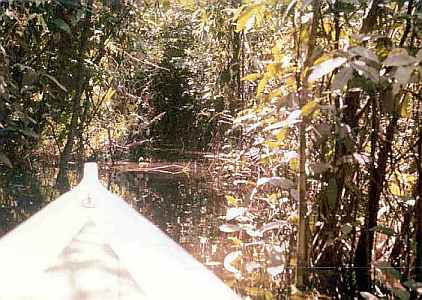
and found a personable navigator — Daniel! Six hour trip to confluence of Amazon and Negro, then into Solimões and through narrow creeks to enter cathedral-like forest. Exactly what I wanted.
Arranged a second trip for yesterday, another six hours, this time north, very different as we went through forest to cachoeira where we swam. God knows what you could pick up!
Perhaps it's the influence of the other estrangeiros who come filled with visions of tropical menace and talk of all manner of ailments but I find myself becoming “health conscious.” Won't dare miss my malaria tablet; bathe open “wound” on my foot a) with antiseptic solution b)powder antiseptic c) cover with Band-aid. Ultra careful with water and absolutely refuse salads.
Words like malaria, yellow fever, typhoid, hepatitis, septic wounds etc. commonplace in vocabulary but perhaps it's something else that calls for caution. In the U.S., in developed countries we have reached an ascendancy of man over Nature, control lies in our hands. The environment has been conquered and controlled physically and spiritually. Here, not so: when you enter the forest environment you are entirely at its mercy. Man is out of scale here, his size nothing against the horizonless, surrounding forest.
Again and again, I think of the entradas: How the small band of Raposo Tavares could have found its way through the jungle is amazing. Deviate for one moment from the mainstream and you enter a maze of water that twists through the forest, sometimes spreading like a lake, sometimes splitting into different streams that take off in several directions.
For an hour on Friday we drifted down a section of the Solimões, engine shut
off, everyone silenced. It was like meditation in a great cathedral. The trees offering every shade of green, the waters of the river colored green with their reflections.
A forbidding environment, gnarled roots of trees exposed on the banks where storm waters have torn away the soil; trees standing in the water, dead twisted shapes awaiting the final thrust of nature, when they will loosen their hold on the soil, fall and be carried away. Clumps of hyacinth stretch out from the banks, sometimes grow like small islands midstream.
Inside the forest, the water is smooth as glass, the area deserted, only occasional glimpse of a canoe with a fisherman sitting cross-legged up front, bow and arrow ready for action. A scene that was the same hundreds, thousands of years ago.
Waters deep blue out in the great rivers Amazon and Negro, a turbulent brown and blue at confluence, green in the forest. Brown, too, with soils carried down from the Andes.

Reflections on Slavery and Servitude in Brazil
Brazil - The Making of a Novel - Part 26
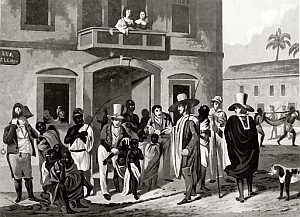
August 15- August 16: At one point last night, some of us commented on behavior and service of crew in what is obviously one of the great attractions of Brazil. They're surly, uncooperative, unprofessional, ungrateful. They give the impression of simply not caring, one way or the other. Reflecting on this, a Brazilian at the table said that the difference between them and, say people in the service industry in Europe/U.S. was that here they were an extension of the servitude of slavery.
The Journey - Amazon River, Augusto Montenegro, Belém to Manaus, August 12 - August 17, 1980
August 15- August 16: At one point last night, some of us commented on behavior and service of crew in what is obviously one of the great attractions of Brazil. They're surly, uncooperative, unprofessional, ungrateful. They give the impression of simply not caring, one way or the other. Reflecting on this, a Brazilian at the table said that the difference between them and, say people in the service industry in Europe/U.S. was that here they were an extension of the servitude of slavery.
Interesting point, especially when considered against fact that slavery was only abolished in 1889, less than a hundred years ago. Just as there are many misconceptions or ignorance about the finer aspects of Brazilian history, so, too, the darker side. Brazilians pride themselves on the peaceful, humane liberation of their slaves but I'm beginning to believe that the truth may run somewhat contrary, that they have an exceptionally long way to go to finalize the adjustment between slavery/freedom. “Born free to live in chains,” truly applicable!
![]() |
| Brazilian Slave Ship - Johan Moritz Rugendas New York Public Library Digital Collection |
Elsa, the German girl stayed with a casa grande family in Fortaleza and was convinced there is also a racial element: Her hosts kept reminding her that they were “Portuguese,” i.e. “white” of the best sort. The dona of the house boasted that she had already “sold” six servant girls to the south. Elsa took that literally, though I suspect it's more of the South African way of “selling” — the arranging of girls from the farm “good girls” to go south where they're coveted because they're “honest, reliable,” that sort of thing.
Another subject that came up was the “internationalization” of the Amazon basin, once suggested by a U.N. conference but, predictably, violently resisted by the Brazilians. (In the north, among few expressions of political graffiti: AMAZONIA PARA BRASILEIRO.) A young Brazilian passenger himself suggested that this would be only way to “develop” the area properly. From what I have seen and heard about other “development” projects in the North-North-East, I'm inclined toward agreeing. At the same time, I have to consider the effect of the Tropics on Western Man - Perhaps Gilberto Freyre is too optimistic, idealistic - Perhaps the true Brazilian, man of the tropics, has not yet appeared on the scene or developed sufficiently to cope with the land, the climate and its challenges.
![]() |
| Amazon River settlement near Manaus |
Then, too, the food: With rare exception, usually in private homes, it's the same monotonous starchy stuff, steak, chicken, potatoes sometimes, rice, farina, beans. The food markets in the Amazon ports are the worst I've seen anywhere. Great, open mounds of freshly-butchered meat, minimal vegetables and little to see of the exotic tropical fruits people rave about. An inveterate traveler, I can stomach a great deal but here even I reach a limit.
Where do you begin to build a “modern nation”? Aren't these basic lifestyles important? Cleanliness next to godliness, says the proverb?
I wonder, though, just how much the negative thoughts expressed here are a reflection of the depressed North-East and the unfathomable “green hell.” How heavily do those weigh on a man's soul? What will the contrast be like in the south?
Also discussed the difficulty of bridging the gap between “moneyed (apparently) estrangeiros” and locals aboard prompted by so small an incident as attitude of barman. One senses his resentment of foreigners' continual ability to go up and buy beers, cool drinks etc...It would be almost impossible to explain to him that every cent of this was worked for year after year. Says the young Brazilian with us: “They think like slaves.” Or is it simply, a “tropical” don't-give-a-damn mentality.
![]() |
| Amazon Voyage 1980
|
Amazon - I begin a Journey on the River Sea from Belém to Manaus
Brazil - The Making of a Novel - Part 24
The Journey - Amazon River, Augusto Montenegro, Belém to Manaus, August 12 - August 17, 1980
August 12 Bus trip ended at 5.15. a.m. when I checked into “Litoral Palace Hotel” next to Rodoviária. On trip, noticeable how the true sertão gradually disappears. As you approach Teresina, capital of Piaui, the caatingas give way first to similar vegetation mixed with small palms, then a more benign landscape and beyond Caxais true African style veld. Green in spite of winter and with denseness that is suggestive of the great Amazon belt that lies close to the north.
I was thinking as we passed through one of the innumerable dusty/poor/
ugly/depressed towns of Piauí/Maranhão that this must be a world away from what the rich of Rio/São Paulo know. I doubt whether one in a hundred have ever been here or seen any of this beyond TV. And if that is the case, how much more aggravated was the difference in the past, without “easy” communication of today?
Windowless room in "Litoral Palace" with giant fan, the size of an old plane prop. Woke at 12 and went to city to learn that the only boat to Manaus departs this p.m. Next one is on September 4 (perhaps.) Decide to Go.
August 13 Aboard Augusto Montenegro, up at 5.30 a.m. to witness spectacular sunrise, faint to deep orange sun rising over line of trees, climbing quickly into sky and by 9.30 making it as hot as midday. Size of River (Para) on approach to Amazon is truly “river sea.” Difficult to imagine impact on early voyagers like Orellano/Raposo Tavares reaching Belém from upstream.
Isolated settlements on river banks, buildings hugging shore line, church, bordered by trees.
Most sobering thought is that their only access to “civilization” is along the river. Hemmed in by forest, somewhat like an island; dozens of island “refugia” between forest and river. At point we're approaching now, water to furthest horizon, brown tinge to it.
Many estrangeiros aboard, international mix, Brazilian, French, Canadian, Israeli, American, English, German, students, retirees, holiday-makers, most with idea of once in a lifetime Amazon voyage. Agree. We're all traveling second-class; there's a First Class deck above and a deck “squatter” passage below and aft.
August 14 Why the Amazon has been called a “river sea” is easily imaginable. The extent of the river is such that glancing to one side, say starboard, you fully expect to be coasting along “offshore,” and if you turned round to port, there'd be the ocean! Everyone encountering the Amazon for the first time finds it larger than they expected. Difficult accepting that for five days you will be aboard a major-sized ship moving along the greatest (by water volume) river in the world. You have a problem seeing that very distant line of trees as the edge of the river and not a vast lake or the sea.
BRAZIL - The Epic of a Great Nation
Tiny Puffs of Cloud That Fell to the End of the Earth
Brazil - The Making of a Novel - Part 5
Before leaving Portugal for Brazil, I prepared a list of objectives sent in advance to potential contacts in Brazil's cultural and educational ministries, historians and others whose names had been suggested by sources I'd met in Portugal:
Notes on Research Project: Brazil
My novel is historical and a major part of my work can be
accomplished through a study of published sources.
No matter how assiduously this is undertaken, such bookwork
cannot offer on location observation with its inestimable
value in bringing comprehension and adding reality to your
perspective. The following notes, more or less in line
with my envisaged chapter structure, indicate the kind of
material and experience I am seeking.
Creative people are not supposed to be as formal as this,
but with so vast a project in mind I have to adopt some
kind of organized strategy for the research stage
or I'll never put it all together.
1. Rain forest
I want to describe, in detail, a single acre —
"God's Little Acre," in a way — before mankind's
arrival. I need to speak with experts at a forest research
station (outside Belém?), who can explain, in simplest
terms, the symbiosis of the forest, its creation and
the miraculous web of life that ensures its survival.
I need a geologist to outline the creation of the Amazon
basin and the forces that shaped the sub-continent
as we know it today. A zoologist to tell me about
the animal life of the virgin forest. And a sociologist
who can expound on "man and the forest," the forest's
effect on man over the centuries, both indigenous
and immigrant. (Charles Wagley, An Introduction to Brazil,
has some pertinent remarks on this theme.)
|
Besides these research objectives, I offered a glimpse of my story lines, enough to grasp
my plans for the book and more specific research needs:
Notes on Research Project: Brazil
“While I am aware that the role of the rain forest
in Brazilian history should not be over-emphasized,
I want to open the book with a succinct evocation
of the lifecycle of an acre of virgin rain forest;
its creation and existence before the advent of mankind.
“The first dwellers in the forest, the Indians, are seen
in the period 1492-1500, eight years leading up to the
arrival of Cabral's fleet. Emphasis is placed on
the Tupi-Guarani branch and, in particular, a Tupinamba
and a Tupiniquin group. While a novelistic technique
carries the story forward, I am equally concerned
with a sympathetic account of their lifestyle and its
value-role in the formation of Brazilian society.
“After showing Cabral's landfall, my focus turns to
the Portuguese trading empire in the East, stressing
Goa and Ormuz, in the period 1506 — 1516 to give
the reader a concept of the men and women
who first settled Brazil and their heritage.
|
These gleanings from my outline and in-depth reading and research were intended to convince those whose help I sought that I was involved in a serious project of which I already had more than a working grasp. A breathtaking and formidable task but which, after my two years with James Michener on The Covenant, I had every confidence of accomplishing.
I prepared a draft itinerary that would allow me to touch base with all the important locations in the novel, an itinerary clearly open to revision as priorities demanded.
Draft itinerary for visit to Brazil: July to October 1981
July 2 Arrive Recife from Lisbon
July 3 - 7 Recife/Olinda
July 8 - 12 Recife/Olinda area - "sugar plantation"
July 13 - 14 To Canudos - Pernambuco 'backlands' en route
July 15 - 16 Canudos
July 17 - 18 Salqueiro - Belém (surface)
July 19 - 21 Belém (Amazon forest research station etc.)
July 22 Belém - Manaus (air)
July 23 - 26 Manaus
July 27 - 29 Manaus - Porto Velho (Madeira River?)
July 20 - Aug 8 Porto Velho - Madeira-Mamore railroad/
Aripuana to Alta Floresta/ environs of Rio
Roosevelt etc.
Aug 9 Porto Velho - Brasilia (air)
Aug 10 - Aug 15 Brasília
Aug 16 - Aug 22 Brasília - Salvador via Sáo Francisco area
Aug 23 - Aug 29 Salvador
Aug 30 To Porto Seguro
Aug 31 - Sept l Porto Seguro - Ouro Preto
Sept 2 - 3 Ouro Preto
Sept 4 - 10 Rio de Janeiro (lst visit)
Sept 11 - 15 São Paulo
Sept 16 - 24 São Paulo ( on coffee fazenda)
Sept 21 São Paulo to Asuncion (air)
Sept 22 - 24 Asuncion, Paraguay
Sept 25 - Oct 3 Asuncion - Humaíta to Missiones area etc.
Oct 3 - Oct 17 Rio de Janeiro for consultations with local
Historians/contacts
Oct 18 Return to New York.
|
I was to begin my trip at Salvador, the Mother City, the best possible start to a journey in search of the “real Brazil,” as people in the south refer to Bahia. From Salvador I went to Porto Seguro and Cabrália, walking along the beaches and broad bluffs that are the setting for the opening of my book along the same beach where I saw the young Tupiniquin, Aruanã, at the water's edge on a day in 1500.
![]() |
| Porto Seguro, Brazil |
Tiny puffs of cloud had fallen to the end of the earth. Four... five...six were bunched together just above the horizon, and others were coming to join them. Otherwise the sky was perfectly clear, its blue expanse streaked with the blazing color of the lowering sun.
He made a hesitant progress toward the water, squinting into the distance at the strange clouds. But even as he did so and perplexed as he was, he began to see that his first impression had been wrong. Very quickly now the swiftest clouds lifted above the water and he saw a darker line. There was a flash of understanding: Here were great canoes coming from the end of the earth.
Aruanã watched as they came closer. The sun was gone behind the trees, and he found it difficult to discern the craft, but he stood rooted a while longer before he realized that he must hasten to the village and tell what he had seen. This made him gaze at the horizon again, to be absolutely certain, for it was a fantastic discovery for a man who had gone to seek no more than shells for First Child. They were there, darkening images now, these canoes that had come from the end of the earth.
![]() |
| Landing place of Pedro Alváres Cabral, Brazil, 1500 |
What James Michener Said About "Brazil" by Errol Lincoln Uys
James A. Michener was in Alaska, working on his novel, when Brazil landed in the bookstores. To my delight I received this letter from him:
“Dear Errol,
On this little island, in this little town, the little bookstore carries in its window a copy of Brazil prominently displayed as one of the fine novels of the season. Glad to see on my latest walk that the copy had been sold.
I’m delighted with the reception so far and hope that the book enjoys, as it should, a long, long run.
Best of good fortune in all you attempt. You know how to write.” -- Jim
(Sheldon Jackson College, Sitka, AK, August 28, 1986)
Mr. Michener supported Brazil with generous grants totaling $20,000 over the five years I took to write my epic. Along the way, Michener read many chapters as I wrote them. When invited by my publisher to comment on my manuscript, he had this to say:
“I read with considerable care the substantial segments you sent and can, with honesty and propriety say the following:
‘Since Brazil is larger in size than the United States it merits a full length novel which summarizes and dramatizes its remarkable history. Errol Lincoln Uys, a distinguished writer born in South Africa but resident in America for many years, has written such a book.
‘The flow of his narrative is compelling. His characters are hewn from the history of Brazil. And the timeliness of his philosophical comment is striking.
'He has produced a book that will captivate and instruct and I hope it will find many readers.’"
(Sheldon Jackson College, Sitka, AK, 7 September, 1985)
Before writing Brazil, I worked with Michener on his South African novel, The Covenant, a controversial collaboration fully archived on my website The Secret Covenant - Working with James A Michener I was involved in every aspect of the novel, from its plotting to the final manuscript. Of my story-telling, Michener had this to say:
“Uys showed such a mastery and predilection for plotting that again and again he came up with dazzling ideas that again and again attracted my attention. I am no good at plotting, hold it to be almost an excrescence, and pay far too little attention to it, so that Uys's bold suggestions were often appreciated.
“He really was a remarkable man in his ability to visualize instantly and I rarely had to waste a moment explaining anything. Also, he had the capacity and willingness to catch an idea and run with it in his own direction, often proposing something so far from my intention that I was bedazzled. I judge he could plot six novels a year with intricate beauties; he should have been in G-2 in some complicated war situation.
"Never once did I say, 'So now we have this Englishman at the Mission Station in 1819. How does he get to the Orange River?' without his having nine or eleven possibilities, all good, all logical, all beautifully coordinated. Often I would say, 'too complicated for our boy,' or 'I doubt that our boy would go that far,' but just as often I would say, 'That might be just what he would do..'
"Once we broke away from his conception of a super-dramatic novel, at which he would have been excellent, he grasped immeidately and totally my concept of a novel which would unfold all the qualities of the Afrikaner heritage, and althrough he sometimes tooka dim view of that heritage,he was brilliant in bringing to my attenbtion aspects which I could not have though of by myself, even though I had done and was doing considerable work in the field."
When I set out on my long literary quest for the heart and soul of Brazil, Michener sent me off with these encouraging words:
"Every excerpt, every page you have written for my book shows that you are a writer with a superb use of the English language, a remarkable vocabulary and a very special turn of phrase…You unquestionably have the talent to write almost anything you direct your attention to. You are a great researcher, as your copious notes prior to our work sessions together indicated.
“And you know how to put words together most skillfully as your work on the manuscript proved. With such talents you stand a remarkably good chance in whatever you try. You have also, from what I gleaned in our conversations on the long walks, an acute sense of timeliness in subject matter. That's a rare combination; the most promising I've met with in years of talking with would-be writers."
I know that when James Michener rejoiced in seeing Brazil in the window of that little bookstore in Sitka, Alaska, his expectations were fulfilled.
Brazil – The Light at the End of the Long Tail
It has been 25 years since my 1,000-page epic novel Brazil rolled off the presses. A best-seller in Europe and in South America, Brazil was orphaned in the United States when its editor left Simon and Schuster only two months before its publication in April, 1986.
Six weeks after publication I was told, "Brazil didn’t take off." I had one press interview and one radio interview before my book vanished from local shelves.
In France, critics hailed the novel as a "masterpiece," a first printing of 14,000 copies sold out in three days, and the book became a summer blockbuster. It went on to sell over 400,000 copies in France, the United Kingdom, Germany, Holland, Israel and Brazil.
I was buoyed as much by my international sales figures as by the words of eminent Brazilian literary critic, Wilson Martins, who wrote in the prestigious Jornal do Brasil:
“Uys has accomplished what no Brazilian author from José de Alencar to João Ubaldo Ribeiro, as well as others including Jorge Amado and Bernardo Guimarães was able to do. He is the first to write our national epic in all its truly decisive moments. “Uys is the first to have the talent required for the task, to see us with total honesty and sympathy, the first to understand Brazil as an imaginary creation, coherent in its apparent inconsistencies, organic in its historic development. Descriptions like those of the war with Paraguay are unsurpassed in our literature and evoke the great passages of War and Peace.”
French reviewers were similarly enthusiastic about my work: “A masterpiece! Brazil has the look and feel of an enchanted virgin forest, a totally new and original world for the reader-explorer to discover,” crowed L'Express, Paris. “No one before knew how to bring to life Brazil and her history. Uys's characters are brilliant and colorful, combining elements of the best swashbuckler with those worthy of deepest reflection. Most stunning is that it took a South African, now a naturalized American, to evoke so perfectly the grand but interrupted dream that is Brazil,” lauded Le Figaro.
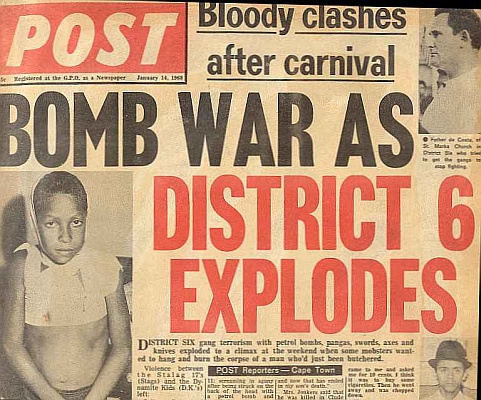
I began my writing career as a newspaperman on the Johannesburg Star and at the helm of the Cape edition of Post, then the country’s biggest weekly publication serving its African and mixed-race population. Following a stint in London, I became Editor-in-Chief of Reader’s Digest in South Africa. In 1977, I emigrated to the United States to work at the magazine’s international headquarters.
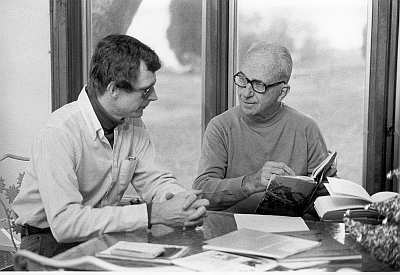
I met the American author James A. Michener through my work at the Digest and became assistant and researcher for Michener’s South African saga, The Covenant. Commenting on our two-year collaboration, Stephen J. May, Michener’s most recent biographer, concluded: “Michener committed a scarlet literary crime and used his celebrated influence in publishing to get away with it." – The affair is chronicled in an extensive literary archive on my website.
"The road will always be longer and harder for some of us," Michener told me. Controversial as our work on the South African book was, the experience convinced me that I could go out and dedicate myself to writing Brazil, as grand a theme as any that Michener undertook.
I spent five years’ time on the writing of Brazil. I devoted a year to my primary research, including a 15,000-mile trek through Brazil, almost entirely by bus in order to get a feel for the vast country and its people at ground level. My journey took me into the Sertão, the arid backlands of the Northeast, and to the Casas Grandes of coastal Pernambuco. I voyaged the Amazon River from Belém to Manuas and explored southernmost Rondônia. I roamed the highlands of Minas Gerais and followed the route of the bandeirantes, the Brazilian pathfinders, from São Paulo to the south.
I returned to the United States at the end of October, 1981 to begin what would become a 750,000-word manuscript written entirely by hand. It took a further four years to complete my task seeking a vision of the Brazilian El Dorado, not beyond the next hill or the river ahead but deep within the soul.
Like my fictional hero, the bandeirante Amador Florés da Silva, I knew periods of utter loneliness and fear, times when I felt the sertão closing in on me but always, I broke through the barrier. I never lost the will to understand the Brazilian genius.
I needed to call on the same steely resolve after seeing my work founder in the United States market. Despite Brazil’s overseas triumph, my follow-up book proposals (including an epic on Mexico) were submitted to no avail. I was more successful with my non-fiction efforts, publishing Riding the Rails: Teenagers on the Move during the Great Depression, a companion volume to the Peabody Award-winning documentary made by Michael Uys and Lexy Lovell, my son and daughter-in-law.
If my spirits ever sank, I had only to re-read Wilson Martins’s review of Brazil. -- Professor Martins truly understood the scope and nuances of my work. As time passed, many other readers who stumbled across the book sent me their own appreciations of Brazil.
“I don’t believe I would ever have felt this strongly about my people if I hadn’t read your book – I feel more Brazilian!” wrote Moises dos Santos, a Brazilian living in the United States. Birdie Hope effused: “I read your entire book aloud to my husband on a series of trips we made — he drove as I read. We started in Mato Grosso, Brazil and finished somewhere in Kansas! The edition we read was an even 1,000 pages. Loved it! It's fabulous! Congratulations for writing it.”
In 2000, I signed a reprint agreement with Silver Spring Press, a small publisher in Connecticut. I added an afterword bringing the story up to Brazil’s 500th anniversary celebration. Seven years later, my French publisher also issued a new edition of Brazil (La Forteresse Verte.)
Brazil was on the "long tail" at Amazon riding on that river sea with its vast schools of customers. Occasionally, sales of the new edition and secondhand copies sent Brazil rippling upward from the tip of the tail to somewhere in the fat middle. It was enough to satisfy a passionate author that someone, somewhere was dipping into his book. This encouraged me to keep paddling, no matter the current.
Then came Kindle, and for Brazil, a totally new world opened up. Having fought so long and hard for my masterpiece, I was ready for this new challenge. I took three decisive steps to launch the e-book, producing:
· Kindle Illustrated Guide to Brazil
Linked to the e-text is a unique and free online guide with more than 200 images and maps, providing an indispensable companion on a fictional journey through five hundred years of Brazilian history. Captions drawn from the narrative enhance the reader's sense of immersion in time and place. The novel guide is also interwoven with the author’s original Brazilian journal and working notes.
· Errol Lincoln Uys – A Writer’s Website
A wide-ranging personal website sharing the author’s archives, journals and working notes. The Making of Brazil and Michener’s Secret Covenant offer meticulously documented and intriguing insights into what went into the writing of these two books, from conceptual outline to final printed manuscript.
· Twitter Edition of Brazil
I am also tweeting my 340,000-word book in 140 (or fewer) - character tweets for thousands of followers. Brazil is the first huge epic to be micro-blogged on Twitter, each tiny “episode” contributing to daily installments of 20 to 50 tweets. The novel’s Twitter handle is @BrazilANovel
The spectacular rise of the nation of Brazil over the past two decades couldn’t be timelier for me, as events like the 2014 World Cup and the 2016 Summer Olympics loom on the horizon. Twenty-five years ago, people made light of ‘'Brazil, land of the future and which always will be." This is no longer so today, as Brazil takes its place among emergent nations.
The timing for a big book on Brazil is perfect. Brazil is ranked No 1 on Kindle’s Brazilian-related books, the e-book’s success driving strong sales of the print edition.
If I’ve one thing to be thankful for – and there are many – it’s that I never stopped believing passionately in Brazil.
Subscribe to:
Posts (Atom)