Showing posts with label Brazil novel. Show all posts

Inside Brazil - Take A Magical Journey Beyond The Clichés and Stereotypes


"A masterpiece! Brazil has the look and feel of an enchanted virgin forest, a totally new and original world for the reader-explorer to discover. -- L'Express, Paris

Brazil is a spellbinding saga of two powerful families that depicts five turbulent centuries in the history of a remarkable land. From colony to kingdom, from empire to nation, Brazil is filled with memorable people living through one of the great adventures in human history.

When writer Errol Lincoln Uys sat down to tell the story of Brazil, he had a key objective in mind: Avoid the stereotypical images of Brazil and its people.

"I rejoice in Carnival, samba, soccer," says Boston-based Uys (pronounced 'Ace'). "Like so many gringos, I knew little else about Brazil. In writing my novel, I discovered one of the great adventures in human history -- the story of an extraordinary people who built the dynamic nation we see today."

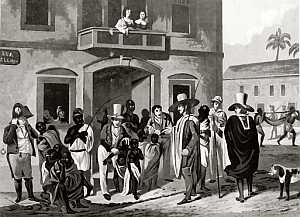
Two powerful families drive the story alongside an awesome array of characters, fictional and real. The Cavalcantis are among the original settlers and establish the classic Brazilian plantation -- vast, powerful, built with slave labor. The da Silvas represent the second element in both contemporary and historical Brazil: pathfinders and prospectors. For generations, these adventurers have set their eyes on El Dorado, which they ultimately find in a coffee fortune at Sāo Paulo.

Brazil is an intensely human story, brutal and violent, tender and passionate. Perilous explorations through the Brazilian wilderness . . . the perpetual clash of pioneer and native, visionary and fortune hunter, master and slave, zealot and exploiter . . . the thunder of war on land and sea as European powers and South American nations pursue their territorial conquests... the triumphs and tragedies of a people who built a nation covering half the South American continent, all are here in one spell-binding saga.

Just how successful Errol Lincoln Uys is in capturing the Brazilian epic is best judged by what Brazilian reviewers and readers say about Uys’s 800-page masterpiece devoted to their country.

Brazil is a classic which will be enjoyed by many in the years to come.” — Agenor Soares dos Santos

“Brazil is a country of enormous contrasts and you had great insight in reflecting such differences in your book through the lives of two fictional families, one from the north and one from the south. When I read your book those feelings I had about the contrasting reality we face daily in Brazil were translated into words. I felt that a puzzle was finally put into place. I hope that writing this book has given you as much pleasure as I had in reading it. “ — Maria Pereira de Queiroz Brandão Teixeira

“Your book gave me a completely new way of viewing Brazilian and Portuguese history. Suddenly everything seemed clear: The raw truthfulness that was the reality of those times and which never comes across so clearly or vividly in history books. Truly, Brazil is a masterpiece!” – Vasco Cartó

“A beautiful work! It took more than a month to read your book, but I enjoyed every moment. It's one of the most solid researches I've seen covering five centuries of Brazil's multi-faceted history. The story line is gripping, easy to understand. My sincere congratulations. “ — Professor Max Justo Guedes

Brazil is a monumental novel. It shows the juxtaposition of sensual/brutal Brazil...It is amazingly on target not only in the historical sense but insightful for the complex modern Brazil, principally the all-important extended family. A theme vividly illustrated in the first chapters and carried throughout the novel.” — Edson Nery da Fonseca

“I am Brazilian but have lived in the United States since the age of two. After reading your novel, I feel I can regain the culture that I lost — I feel more Brazilian! I don't believe I would ever have felt this strongly about my people if I hadn't read your book.” — Moises A. dos Santos

Says Wilson Martins, one of Brazil’s most eminent literary critics: “Errol Lincoln Uys is the first to write our national epic in all its decisive episodes – the first outsider to see Brazil with total honesty and sympathy. Descriptions like those of the war with Paraguay are unsurpassed in our literature and evoke the grand passages of War and Peace.”

"A masterpiece! Brazil has the look and feel of an enchanted virgin forest, a totally new and original world for the reader-explorer to discover. -- L'Express, Paris

"Pulsing with vigor, this is a vast novel to tell the story of a vast country. Uys depicts Brazil's evolution from colony to empire to republic. Lacing the tale together are two families: the Cavalcantis, planters and slave owners; and representing another fundamental social stream, the da Silvas, prospectors, adventurers, seekers of El Dorado." Publishers Weekly

"No one before knew how to bring to life Brazil and her history. Uys's characters are brilliant and colorful, combining elements of the best swashbuckler with those worthy of deepest reflection. Most stunning is that it took a South African, now a naturalized American, to evoke so perfectly the grand but interrupted dream that is Brazil." -- Le Figaro, Paris

What better way for the reader-explorer of an epic as vast as Brazil to discover a totally new and original world! A great summer read!

FREE ONLINE EXTRAS

AN ILLUSTRATED GUIDE TO BRAZIL, THE NOVEL – WITH 300 IMAGES AND MAPS


AUTHOR’S JOURNAL FROM A FOUR-MONTH, 15,000-MILE TREK FROM THE AMAZON JUNGLE TO THE SOUTH OF BRAZIL


THE MAKING OF A NOVEL, WRITER’S GUIDE TO THE AUTHOR’S FIVE-YEAR QUEST FOR BRAZIL

What James Michener Said About "Brazil" by Errol Lincoln Uys

James A. Michener was in Alaska, working on his novel, when Brazil landed in the bookstores. To my delight I received this letter from him: 
“Dear Errol,
On this little island, in this little town, the little bookstore carries in its window a copy of  Brazil prominently displayed as one of the fine novels of the season. Glad to see on my latest walk that the copy had been sold.
I’m delighted with the reception so far and hope that the book enjoys, as it should, a long, long run.
Best of good fortune in all you attempt. You know how to write.”  -- Jim
(Sheldon Jackson College, Sitka, AK, August 28, 1986)
Mr. Michener supported Brazil with generous grants totaling $20,000 over the five years I took to write my epic.  Along the way, Michener read many chapters as I wrote them.  When invited by my publisher to comment on my manuscript, he had this to say:
“I read with considerable care the substantial segments you sent and can, with honesty and propriety say the following:
‘Since Brazil is larger in size than the United States it merits a full length novel which summarizes and dramatizes its remarkable history. Errol Lincoln Uys, a distinguished writer born in South Africa but resident in America for many years, has written such a book.
‘The flow of his narrative is compelling. His characters are hewn from the history of Brazil. And the timeliness of his philosophical comment is striking.
'He has produced a book that will captivate and instruct and I hope it will find many readers.’"
(Sheldon Jackson College, Sitka, AK, 7 September, 1985)
Before writing Brazil, I worked with Michener on his South African novel, The Covenant, a controversial collaboration fully archived on my website The Secret Covenant - Working with James A Michener  I was involved in every aspect of the novel, from its plotting to the final manuscript. Of my story-telling, Michener had this to say:

Uys showed such a mastery and predilection for plotting that again and again he came up with dazzling ideas that again and again attracted my attention. I am no good at plotting, hold it to be almost an excrescence, and pay far too little attention to it, so that Uys's bold suggestions were often appreciated.
“He really was a remarkable man in his ability to visualize instantly and I rarely had to waste a moment explaining anything. Also, he had the capacity and willingness to catch an idea and run with it in his own direction, often proposing something so far from my intention that I was bedazzled. I judge he could plot six novels a year with intricate beauties; he should have been in G-2 in some complicated war situation.
"Never once did I say, 'So now we have this Englishman at the Mission Station in 1819. How does he get to the Orange River?'  without his having nine or eleven possibilities, all good, all logical, all beautifully coordinated. Often I would say, 'too complicated for our boy,' or 'I doubt that our boy would go that far,' but just as often I would say, 'That might be just what he would do..'
"Once we broke away from his conception of a super-dramatic novel, at which he would have been excellent, he grasped immeidately and totally my concept of a novel which would unfold all the qualities of the Afrikaner heritage, and althrough he sometimes tooka dim view of that heritage,he was brilliant in bringing to my attenbtion aspects which I could not have though of by myself, even though I had done and was doing considerable work in the field."

When I set out on my long literary quest for the heart and soul of Brazil, Michener sent me off with these encouraging words:
"Every excerpt, every page you have written for my book shows that you are a writer with a superb use of the English language, a remarkable vocabulary and a very special turn of phrase…You unquestionably have the talent to write almost anything you direct your attention to. You are a great researcher, as your copious notes prior to our work sessions together indicated.
“And you know how to put words together most skillfully as your work on the manuscript proved. With such talents you stand a remarkably good chance in whatever you try. You have also, from what I gleaned in our conversations on the long walks, an acute sense of timeliness in subject matter. That's a rare combination; the most promising I've met with in years of talking with would-be writers."

I know that when James Michener rejoiced in seeing Brazil in the window of that little bookstore in Sitka, Alaska, his expectations  were fulfilled.

Brazil – The Light at the End of the Long Tail


It has been 25 years since my 1,000-page epic novel Brazil rolled off the presses. A best-seller in Europe and in South America, Brazil was orphaned in the United States when its editor left Simon and Schuster only two months before its publication in April, 1986.
Six weeks after publication I was told, "Brazil didn’t take off." I had one press interview and one radio interview before my book vanished from local shelves.
In France, critics hailed the novel as a "masterpiece," a first printing of 14,000 copies sold out in three days, and the book became a summer blockbuster. It went on to sell over 400,000 copies in France, the United Kingdom, Germany, Holland, Israel and Brazil.
I was buoyed as much by my international sales figures as by the words of eminent Brazilian literary critic, Wilson Martins, who wrote in the prestigious Jornal do Brasil:
“Uys has accomplished what no Brazilian author from José de Alencar to João Ubaldo Ribeiro, as well as others including Jorge Amado and Bernardo Guimarães was able to do. He is the first to write our national epic in all its truly decisive moments.

“Uys is the first to have the talent required for the task, to see us with total honesty and sympathy, the first to understand Brazil as an imaginary creation, coherent in its apparent inconsistencies, organic in its historic development. Descriptions like those of the war with Paraguay are unsurpassed in our literature and evoke the great passages of War and Peace.”

French reviewers were similarly enthusiastic about my work: A masterpiece! Brazil has the look and feel of an enchanted virgin forest, a totally new and original world for the reader-explorer to discover,” crowed L'Express, Paris. “No one before knew how to bring to life Brazil and her history. Uys's characters are brilliant and colorful, combining elements of the best swashbuckler with those worthy of deepest reflection. Most stunning is that it took a South African, now a naturalized American, to evoke so perfectly the grand but interrupted dream that is Brazil,” lauded Le Figaro.


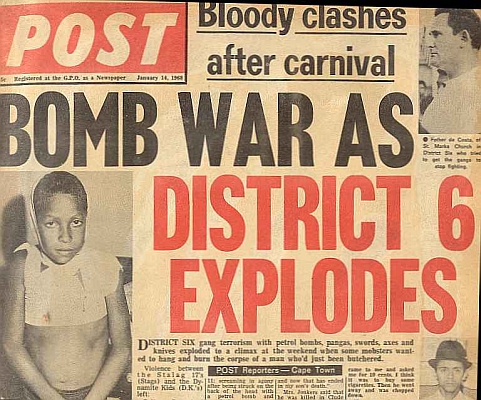
I began my writing career as a newspaperman on the Johannesburg Star and at the helm of the Cape edition of Post, then the country’s biggest weekly publication serving its African and mixed-race population. Following a stint in London, I became Editor-in-Chief of Reader’s Digest in South Africa. In 1977, I emigrated to the United States to work at the magazine’s international headquarters.
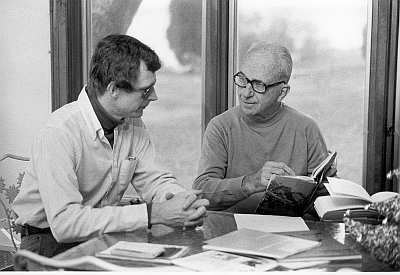
I met the American author James A. Michener through my work at the Digest and became assistant and researcher for Michener’s South African saga, The Covenant. Commenting on our two-year collaboration, Stephen J. May, Michener’s most recent biographer, concluded: “Michener committed a scarlet literary crime and used his celebrated influence in publishing to get away with it." – The affair is chronicled in an extensive literary archive on my website.

"The road will always be longer and harder for some of us," Michener told me. Controversial as our work on the South African book was, the experience convinced me that I could go out and dedicate myself to writing Brazil, as grand a theme as any that Michener undertook.
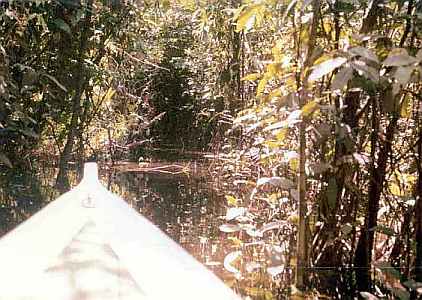
I spent five years’ time on the writing of Brazil. I devoted a year to my primary research, including a 15,000-mile trek through Brazil, almost entirely by bus in order to get a feel for the vast country and its people at ground level. My journey took me into the Sertão, the arid backlands of the Northeast, and to the Casas Grandes of coastal Pernambuco. I voyaged the Amazon River from Belém to Manuas and explored southernmost Rondônia. I roamed the highlands of Minas Gerais and followed the route of the bandeirantes, the Brazilian pathfinders, from São Paulo to the south.

I returned to the United States at the end of October, 1981 to begin what would become a 750,000-word manuscript written entirely by hand. It took a further four years to complete my task seeking a vision of the Brazilian El Dorado, not beyond the next hill or the river ahead but deep within the soul.
Like my fictional hero, the bandeirante Amador Florés da Silva, I knew periods of utter loneliness and fear, times when I felt the sertão closing in on me but always, I broke through the barrier. I never lost the will to understand the Brazilian genius.
I needed to call on the same steely resolve after seeing my work founder in the United States market. Despite Brazil’s overseas triumph, my follow-up book proposals (including an epic on Mexico) were submitted to no avail. I was more successful with my non-fiction efforts, publishing Riding the Rails: Teenagers on the Move during the Great Depression, a companion volume to the Peabody Award-winning documentary made by Michael Uys and Lexy Lovell, my son and daughter-in-law.

If my spirits ever sank, I had only to re-read Wilson Martins’s review of Brazil. -- Professor Martins truly understood the scope and nuances of my work. As time passed, many other readers who stumbled across the book sent me their own appreciations of Brazil.
“I don’t believe I would ever have felt this strongly about my people if I hadn’t read your book – I feel more Brazilian!” wrote Moises dos Santos, a Brazilian living in the United States. Birdie Hope effused: “I read your entire book aloud to my husband on a series of trips we made — he drove as I read. We started in Mato Grosso, Brazil and finished somewhere in Kansas! The edition we read was an even 1,000 pages. Loved it! It's fabulous! Congratulations for writing it.”
In 2000, I signed a reprint agreement with Silver Spring Press, a small publisher in Connecticut. I added an afterword bringing the story up to Brazil’s 500th anniversary celebration. Seven years later, my French publisher also issued a new edition of Brazil (La Forteresse Verte.)
Brazil was on the "long tail" at Amazon riding on that river sea with its vast schools of customers. Occasionally, sales of the new edition and secondhand copies sent Brazil rippling upward from the tip of the tail to somewhere in the fat middle. It was enough to satisfy a passionate author that someone, somewhere was dipping into his book. This encouraged me to keep paddling, no matter the current.
Then came Kindle, and for Brazil, a totally new world opened up. Having fought so long and hard for my masterpiece, I was ready for this new challenge. I took three decisive steps to launch the e-book, producing:
·        Kindle Illustrated Guide to Brazil

Linked to the e-text is a unique and free online guide with more than 200 images and maps, providing an indispensable companion on a fictional journey through five hundred years of Brazilian history. Captions drawn from the narrative enhance the reader's sense of immersion in time and place. The novel guide is also interwoven with the author’s original Brazilian journal and working notes.

·        Errol Lincoln Uys – A Writer’s Website


A wide-ranging personal website sharing the author’s archives, journals and working notes. The Making of Brazil and Michener’s Secret Covenant offer meticulously documented and intriguing insights into what went into the writing of these two books, from conceptual outline to final printed manuscript.

·        Twitter Edition of Brazil


I am also tweeting my 340,000-word book in 140 (or fewer) - character tweets for thousands of followers. Brazil is the first huge epic to be micro-blogged on Twitter, each tiny “episode” contributing to daily installments of 20 to 50 tweets. The novel’s Twitter handle is @BrazilANovel


The spectacular rise of the nation of Brazil over the past two decades couldn’t be timelier for me, as events like the 2014 World Cup and the 2016 Summer Olympics loom on the horizon. Twenty-five years ago, people made light of ‘'Brazil, land of the future and which always will be." This is no longer so today, as Brazil takes its place among emergent nations.
The timing for a big book on Brazil is perfect. Brazil is ranked No 1 on Kindle’s Brazilian-related books, the e-book’s success driving strong sales of the print edition.
If I’ve one thing to be thankful for – and there are many – it’s that I never stopped believing passionately in Brazil.