Showing posts with label Books. Show all posts

Why Choose Brazil as the Subject of an Epic Novel?

BRAZIL -- The Making of a Novel - Part 2
 
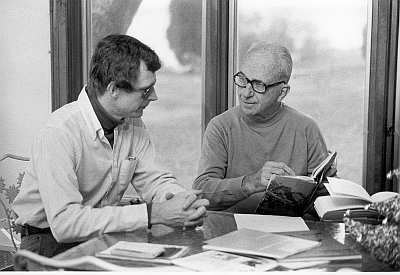
Why choose Brazil as my subject? And why on such an immense scale? I've always believed one should make no small dreams for the results will be commensurate. During our time together, James Michener and I spoke about places that would lend themselves to treatment in epic novels. He mentioned Alaska and the Caribbean, both of which would become locales for Michener books. I suggested Brazil.
 
The more I began to think of Brazil, the more reasons I found for wanting to write about the country. My very ignorance prompted question after question, and when I began to look for answers, I quickly sensed a tremendous story that hadn't been told to the North American public. As an outsider to both nations, I had a singular vantage point unbridled with innate prejudices and chauvinism.
 
Among other compelling reasons for choosing Brazil, not the least was my having just spent two years delving exhaustively into the history of my birthplace. Broadly-speaking, the relations between the races in South Africa and Brazil couldn't have been more different in the 1980s: how, when, why, I wanted to know, did the two nations take such radically different paths? This wasn't something to include in the book I envisaged about Brazil but it gave me a base-line to work from in considering the dynamics of Brazilian society. In Africa, I also traveled widely in Mozambique and Angola, gaining insights into the Portuguese, their history and way of life, a valuable introduction to the colonizers of Brazil.
 
On January 5, 1981, the first working day of the year, I woke up at the usual time when I would leave for the Digest's offices in Chappaqua. This day there was no Digest, only the vast unknown in Brazil and with my future.
 
During the next three months I haunted libraries and second-hand bookstores in New York. I wasn't selective but read anything I came across related to Portugal and Brazil, anything but fiction. In plotting so vast a story one has to take care not to lock into the imagination of others and inadvertently borrowing from their works, a pitfall Michener drew my attention to when we were working on The Covenant.
 
I read hundreds of books and articles on my library forays, not only on my initial three-month plunge
into Brazil but as I went along. A small sampling of my reading list includes some of the classic works on Brazil and Portugal, both contemporary and historic:


The Mansions and the Shanties, Gilberto Freyre  
The Masters and the Slaves, Gilberto Freyre
Order and Progress, Gilberto Freyre  
New World in the Tropics, Gilberto Freyre
Bandeirantes and Pioneers, Vianna Moog
History of Portugal, Antonio H. de Oliveira Marques
Portuguese Seaborne Empire, Charles R. Boxer
Portugal and Brazil, Harold Livermore and W.J. Entwhistle
Colonial Background of Modern Brazil, Caio Prado, Jr.
The Brazilians, José Honorio Rodrigues
Latin America, Preston E. James
History of Brazil, Andrew Grant, 1809
History of Brazil, E. Bradford Burns
From Barter to Slavery, Portuguese and Indians, 1500-1800, A. Marchant
Captains of Brazil, Elaine Sanceau
True History of His Captivity, Hans Staden
Discovery of the Amazon, according to account of Fr. Gaspar de Carvajal
The Histories of Brazil, Pero de Magalhaes, trs. John B. Stetson
Hakluyt, the Principal Navigations, Volume XI
A Treatise of Brazil, Padre Fernão de Cardim in Purchas, his Pilgrims XVI
Dutch in Brazil, 1624-1654, Charles R. Boxer
Golden Age of Brazil, 1695-1750 , Charles R. Boxer
Salvador de Sa and the Struggle for Brazil and Angola, Charles R. Boxer
Brazil, Portrait of Half a Continent, T. Lynn Smith
Apostle of Brazil: Padre João Anchieta, Helen G. Dominian
Jews in Colonial Brazil, Arnold Wiznitzer
The Negro in Brazil, Arthur Ramos trs. Richard Pattee
Neither Slave nor Free, David W. Cohen and Jack P. Greene
African Religions of Brazil, Roger Bastide
Brazilian Culture, Fernando de Azevedo, trs. William R. Crawford
Evolution of Brazil, Manoel de Oliveira Lima
Rebellion in the Backlands, Euclides da Cunha
 
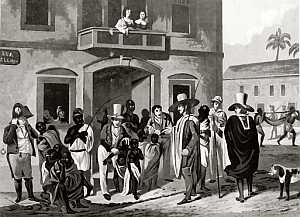
One of my early sources was the three volume History of Brazil written by the English romantic poet, Robert Southey, between 1810 and 1819, considered the first comprehensive history of colonial Brazil. I pored over Southey's thousand-plus pages in awe of his achievement, the closest he ever came to Brazil was among the volumes in the library of his uncle, Reverend Herbert Hill, chaplain to the English Factory at Lisbon. I would have the opportunity to visit Brazil and carried Southey with in my thoughts, an inspiration to another outsider making a literary journey of epic proportions. Southey showed that it could be done.


Brazil – The Light at the End of the Long Tail


It has been 25 years since my 1,000-page epic novel Brazil rolled off the presses. A best-seller in Europe and in South America, Brazil was orphaned in the United States when its editor left Simon and Schuster only two months before its publication in April, 1986.
Six weeks after publication I was told, "Brazil didn’t take off." I had one press interview and one radio interview before my book vanished from local shelves.
In France, critics hailed the novel as a "masterpiece," a first printing of 14,000 copies sold out in three days, and the book became a summer blockbuster. It went on to sell over 400,000 copies in France, the United Kingdom, Germany, Holland, Israel and Brazil.
I was buoyed as much by my international sales figures as by the words of eminent Brazilian literary critic, Wilson Martins, who wrote in the prestigious Jornal do Brasil:
“Uys has accomplished what no Brazilian author from José de Alencar to João Ubaldo Ribeiro, as well as others including Jorge Amado and Bernardo Guimarães was able to do. He is the first to write our national epic in all its truly decisive moments.

“Uys is the first to have the talent required for the task, to see us with total honesty and sympathy, the first to understand Brazil as an imaginary creation, coherent in its apparent inconsistencies, organic in its historic development. Descriptions like those of the war with Paraguay are unsurpassed in our literature and evoke the great passages of War and Peace.”

French reviewers were similarly enthusiastic about my work: A masterpiece! Brazil has the look and feel of an enchanted virgin forest, a totally new and original world for the reader-explorer to discover,” crowed L'Express, Paris. “No one before knew how to bring to life Brazil and her history. Uys's characters are brilliant and colorful, combining elements of the best swashbuckler with those worthy of deepest reflection. Most stunning is that it took a South African, now a naturalized American, to evoke so perfectly the grand but interrupted dream that is Brazil,” lauded Le Figaro.


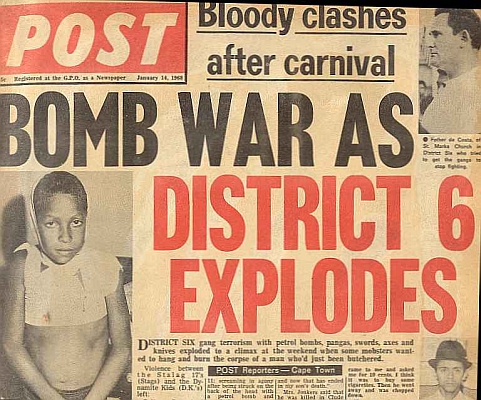
I began my writing career as a newspaperman on the Johannesburg Star and at the helm of the Cape edition of Post, then the country’s biggest weekly publication serving its African and mixed-race population. Following a stint in London, I became Editor-in-Chief of Reader’s Digest in South Africa. In 1977, I emigrated to the United States to work at the magazine’s international headquarters.
I met the American author James A. Michener through my work at the Digest and became assistant and researcher for Michener’s South African saga, The Covenant. Commenting on our two-year collaboration, Stephen J. May, Michener’s most recent biographer, concluded: “Michener committed a scarlet literary crime and used his celebrated influence in publishing to get away with it." – The affair is chronicled in an extensive literary archive on my website.

"The road will always be longer and harder for some of us," Michener told me. Controversial as our work on the South African book was, the experience convinced me that I could go out and dedicate myself to writing Brazil, as grand a theme as any that Michener undertook.
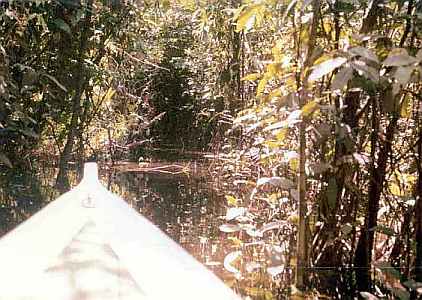
I spent five years’ time on the writing of Brazil. I devoted a year to my primary research, including a 15,000-mile trek through Brazil, almost entirely by bus in order to get a feel for the vast country and its people at ground level. My journey took me into the Sertão, the arid backlands of the Northeast, and to the Casas Grandes of coastal Pernambuco. I voyaged the Amazon River from Belém to Manuas and explored southernmost Rondônia. I roamed the highlands of Minas Gerais and followed the route of the bandeirantes, the Brazilian pathfinders, from São Paulo to the south.

I returned to the United States at the end of October, 1981 to begin what would become a 750,000-word manuscript written entirely by hand. It took a further four years to complete my task seeking a vision of the Brazilian El Dorado, not beyond the next hill or the river ahead but deep within the soul.
Like my fictional hero, the bandeirante Amador Florés da Silva, I knew periods of utter loneliness and fear, times when I felt the sertão closing in on me but always, I broke through the barrier. I never lost the will to understand the Brazilian genius.
I needed to call on the same steely resolve after seeing my work founder in the United States market. Despite Brazil’s overseas triumph, my follow-up book proposals (including an epic on Mexico) were submitted to no avail. I was more successful with my non-fiction efforts, publishing Riding the Rails: Teenagers on the Move during the Great Depression, a companion volume to the Peabody Award-winning documentary made by Michael Uys and Lexy Lovell, my son and daughter-in-law.

If my spirits ever sank, I had only to re-read Wilson Martins’s review of Brazil. -- Professor Martins truly understood the scope and nuances of my work. As time passed, many other readers who stumbled across the book sent me their own appreciations of Brazil.
“I don’t believe I would ever have felt this strongly about my people if I hadn’t read your book – I feel more Brazilian!” wrote Moises dos Santos, a Brazilian living in the United States. Birdie Hope effused: “I read your entire book aloud to my husband on a series of trips we made — he drove as I read. We started in Mato Grosso, Brazil and finished somewhere in Kansas! The edition we read was an even 1,000 pages. Loved it! It's fabulous! Congratulations for writing it.”
In 2000, I signed a reprint agreement with Silver Spring Press, a small publisher in Connecticut. I added an afterword bringing the story up to Brazil’s 500th anniversary celebration. Seven years later, my French publisher also issued a new edition of Brazil (La Forteresse Verte.)
Brazil was on the "long tail" at Amazon riding on that river sea with its vast schools of customers. Occasionally, sales of the new edition and secondhand copies sent Brazil rippling upward from the tip of the tail to somewhere in the fat middle. It was enough to satisfy a passionate author that someone, somewhere was dipping into his book. This encouraged me to keep paddling, no matter the current.
Then came Kindle, and for Brazil, a totally new world opened up. Having fought so long and hard for my masterpiece, I was ready for this new challenge. I took three decisive steps to launch the e-book, producing:
·        Kindle Illustrated Guide to Brazil

Linked to the e-text is a unique and free online guide with more than 200 images and maps, providing an indispensable companion on a fictional journey through five hundred years of Brazilian history. Captions drawn from the narrative enhance the reader's sense of immersion in time and place. The novel guide is also interwoven with the author’s original Brazilian journal and working notes.

·        Errol Lincoln Uys – A Writer’s Website


A wide-ranging personal website sharing the author’s archives, journals and working notes. The Making of Brazil and Michener’s Secret Covenant offer meticulously documented and intriguing insights into what went into the writing of these two books, from conceptual outline to final printed manuscript.

·        Twitter Edition of Brazil


I am also tweeting my 340,000-word book in 140 (or fewer) - character tweets for thousands of followers. Brazil is the first huge epic to be micro-blogged on Twitter, each tiny “episode” contributing to daily installments of 20 to 50 tweets. The novel’s Twitter handle is @BrazilANovel


The spectacular rise of the nation of Brazil over the past two decades couldn’t be timelier for me, as events like the 2014 World Cup and the 2016 Summer Olympics loom on the horizon. Twenty-five years ago, people made light of ‘'Brazil, land of the future and which always will be." This is no longer so today, as Brazil takes its place among emergent nations.
The timing for a big book on Brazil is perfect. Brazil is ranked No 1 on Kindle’s Brazilian-related books, the e-book’s success driving strong sales of the print edition.
If I’ve one thing to be thankful for – and there are many – it’s that I never stopped believing passionately in Brazil.

Robert Coover’s History of the Future of Narrative

Novelist Robert Coover, a founder of the Electronic Literature Foundation, traces the marvelous story of narrative from the invention of writing in the Bronze Age to the dawn of our own Digital Age – from clay tablet to papyrus and parchment scrolls, and from movable type and printing presses to global hypertext.

In this keynote address at the Electronic Literature in Europe seminar last September, Dr. Coover looks at the Digital Revolution and its impact on those who create books and those who read them. The talk is a short version of a chapter in the forthcoming Cambridge History of the American Novel. [The editors at Cambridge University Press have graciously granted Coover permission to allow the recording to circulate freely on the Internet on a free, open-access basis.]


A History of the Future of Narrative: Robert Coover from Scott Rettberg on Vimeo.