Brazil – The Light at the End of the Long Tail
Top 10 Reasons Why Readers Like "Brazil"
Over the years, I've collected these personal notes from my readers. Some are from Brazilian immigrants in the United States, for whom Brazil brings their children an extraordinary understanding of the land of their heritage. Some are from people with a profound knowledge of our neighbor to the south. Some are from readers like Birdie Hope:
"I read your entire book aloud to my husband on a series of trips we made. --He drove, I read. -- We started in Mato Grosso, Brazil and finished somewhere in Kansas! The edition we read was an even 1,000 pages. Loved it! It's fabulous. Thanks for writing it."

My mind boggles as I think of Birdie and her husband trekking all the way from the Pantanal to Route 66.
I've posted a selection of letters from my readers on my website. Here's a list of the Top 10 reasons why they liked Brazil:
1. "Truly a Masterpiece - a fantastic journey through the centuries"
2. "A Brazilian Rite of Passage"
3. "A Truly Amazing Read"
4. "Brazil is a Classic"
5. "I feel more 'Brazilian’ after reading Brazil'"
6. "A Monumental Novel - As Great and Grand, as Michener's 'Source'"
7. "Brazil draws me as surely as the mystery of South America itself"
8. "I Am Mesmerized"
9. "Loved it! It's Fabulous!"
10. "A Beautiful Work! It’s gripping, easy to understand."
It is both humbling and heartwarming to know just how much Brazil has meant to those who have taken this literary journey to the heart and soul of a great nation.
How Our National Parks Saved a Lost Generation of America's Youth
“As long as you kept moving you were all right, but you were going nowhere,” recalls Jim Mitchell, who ran away from his Kenosha, Wisconsin home in winter 1933, when he was 17. “I remember the morning my Dad came home. 'I lost my job. I'm out of work,' he told mother. It was the first time I saw my father cry. Things went downhill. You lived off your relatives. You went to eat at grandma's and here and there until you hit rock bottom and went on relief. Everything closed in on me. I sat down and told myself, I'd lighten my parents' burden if I took off.

“The quickest and easiest way was to jump a train and go somewhere. We thought it was the magic carpet – the click of the rails – romance,” said Mitchell. Jim and a buddy Peter Lijinski – “Poke” – hopped freight trains across the Midwest. “You went on the road and exchanged one misery for another. You were always filthy and constantly hungry. You'd take whatever odd jobs you could. We did everything from mowing lawns to cleaning grease traps in restaurants. It was humiliating but sometimes you panhandled.
“Nothing was happening and there was no direction in your life. Sometimes you'd meet kids your age in town and start talking with them, I remember once I was cutting a lawn. I started talking to this perfectly nice girl and her mother called her away. Boy, that really hurt. I was as good as her or anyone else.
“I didn't want to live on the road. You had to do something with your life. You couldn't roam around like a damn dog eating out of garbage cans. That's about what you were, a damn dog roaming the road.”
Jim Mitchell and Poke typified the crisis of America's vagabond youth seen as so urgent and volatile by Franklin D. Roosevelt that on March 21, 1933, barely two weeks into his presidency, Roosevelt sent a message to Congress. It stated in part: “I propose to create a Civilian Conservation Corps to be used in simple work, not interfering with normal employment and confining itself to forestry, the prevention of soil erosion, flood control and similar projects. I estimate that 250,000 men can be given temporary employment by early summer.”

Before the close of his first month in office, FDR signed an act creating the Civilian Conservation Corps (CCC), in which unemployed and unmarried men between the ages of l8 and 25 were eligible to enroll. They were to be paid $30 a month, of which $25 was to be sent directly to their needy and dependent families.
The first camp was set up on April 17, 1933 -- just 12 days after the CCC was officially inaugurated. Two hundred CCC enrollees were trucked to “Camp Roosevelt” in the George Washington National Forest near Luray, Virginia to begin work under the supervision of the United States Forestry Service.
By early July, 250,000 young men were settled in 1,468 forest and park camps. They were supervised by 25,000 war veterans and 25,000 experienced woodsmen. In ten years, the CCC took two and a half million men from the ranks of the unemployed and put them to work planting 200,000,000 trees, building dams, fighting forest fires, clearing beaches and campgrounds.

At Lake City, Iowa, Mitchell and Poke ran into an army officer. They told him they were on the road and had just got work with a carnival. “That's no life for kids,” he said. “Why don't you join the CCC?”
Mitchell was inducted into Company 2616 stationed at Camp Norwood on the banks of the Wisconsin River, nine miles north of Merrill, Wisconsin.
“We were trucked from a railroad depot to our new home which consisted of a group of long, low buildings covered with tarpaper in a clearing in the pines. Little did we realize that this stark encampment was the haven thousands of boys like ourselves needed.
“There was a wonderful social mixture in the CCC. We lived 40 men to a barrack. Two bunks down there would be a farm kid who couldn’t read or write. If he got a letter from home, somebody read it to him. You could go up a couple more bunks and find a medical student who dropped out of the University of Wisconsin. Another boy’s father had an automobile dealership that went bust. Some kids were literally hoods from the cities.
“I found out what discipline was about. Captain Entringer who ran the camp held inspection
every morning. Your bunk had to be neat. You had to be able to bounce a quarter off your blanket. Your foot-locker had to be in a precise place. There had to be no dust on your shoes. If you failed inspection, when you got off work that day you would have extra duty. You’d work in the kitchen or chop wood until 10 o’clock.
“On a cold fall day in 1934, they sent our crew to work in a tamarack swamp. Our job was to drag 20-foot long tamarack logs out of the muck and mire of 500-year-old loon dung. The day started with our getting wet to our belt buckles and it never got any better. It was a messy, dirty business. We slogged back to camp that night bone-weary and whipped.
“As we passed the dispensary, Lt. Kuehl, the camp doctor, barked, 'You!' I looked at him and he nodded. 'Yes, you. Come here.'
“The last thing I wanted was a reaming from a shave-tail. I strutted over to him. ‘Yes, Sir,’ I said sullenly.
“He looked me over for a moment and then said in a concerned tone. 'Where are you working, son?' I told him.
“Our crew chief got a tongue-lashing for letting us work on the tamarack detail without hip boots. It was a solid lesson in comradeship and responsibility to your men. I remember thinking to myself, 'Thank God somebody cares about me.'”

Riding the rails in his early 20s, Texas-born Harry Keller occasionally found low-paying harvest jobs. Most of the time he had no work as he bummed his way around nine Western states. In 1933, Keller signed up for the Civilian Conservation Corps and was sent to a CCC camp in the Tonto Basin near Globe, Arizona.
Nearsighted but without glasses, Keller’s first assignment was as powder man on a dynamiting crew, though he had never worked with explosives before. His job was to fill drilled holes with dynamite and ready it for blasting. He got the hang of it quickly enough or he might have ended his CCC days then and there. Headaches caused by exposure to dynamite later resulted in his being transferred to a less hazardous area.
Re-enlisting in the CCC year after year, Keller strung telephone poles across the Tonto Basin, repaired roads, built fish dams, planted trees and fought forest fires. He eventually became head chef at the camp feeding 175 to 200 young men and youths.
“I’d never cooked in my life. I wrote home to my mother asking her to tell me how to prepare this and that,” recalled Keller. He rose to be Mess Sergeant, a position he held for more than three of his eight years in the CCC.
“I was scared and worried before I joined the corps. The CCC taught me responsibility and gave me confidence. Never again did I worry about how I would survive.”
Arthur Hunevan’s parents were in danger of losing their home when he went into the CCC in Northern California. His wages helped them make the payments on their house. Besides alleviating the financial burden on Wallace Horton’s widowed mother, his year in the CCC taught him to understand and work with other people. “I learned that the world did not owe me a living. If I wanted to get ahead, I would have to earn it, said Horton. The former CCC-er went on to become a U.S.A.F. electronics engineer, whose career earned him the Air Force’s highest civilian award.
Runaway Jan van Heé’s self-esteem was “down to ground zero,” when he enlisted in the CCC. “I felt I was no good, unwanted, rotten, dumb, stupid. No one cared for me and no one ever would,” said Van Heé. After six months in the corps, he was made foreman of a fire-fighting unit with six youths. When the fire season ended, he was promoted to a position in the ranger’s office. “I was getting pats on the back. ‘He’s doing a good job,’ my officers said. I began to feel that I was worth something.”
Franklin Roosevelt’s “Tree Army” marched to many different drumbeats. In a personal memoir, Ernest Amundsen recalled being sent to a “spike” camp at West Yellowstone. “We worked on forest service roads. A dump truck hauled loads of gravel. Left-handed boys had to shovel on the right hand side and right handers on the left side. The boss did this with whatever tools we were using. I learned to use a shovel, ax, saw, pick and other tools left-handed. I also learned not to drink whiskey like you drink beer, and how to play poker and how not to play poker.”
Darwood Drake and other North Dakotan farm boys found themselves posted to a CCC camp at Locke, a small community in the heart of the Ozarks 30 miles from Ft. Smith, Arkansas. “We had to get used to the Southern drawl, the slower way of living, the grits and corn pone. We saw poverty-stricken families in ramshackle places with livestock running in and out of the shacks.” In this unlikely locale, inspired by one of the North Dakotans who could tap dance. Drake joined nine comrades in working up a “routine” for the camp show. “None of us was less than 160 pounds and several weighed over 200 pounds. It was a sight to see 10 uncoordinated men jumping up and down trying to tap to ‘The Sidewalks of New York.”
Not every recruit found a haven in the CCC. Weldon Keele signed up in Utah after graduating from high school in May 1935. He was assigned to a camp in Wood Cross, Utah, where he reported in time for supper. “I didn’t know that you had to put your dishes in one place and your knife, fork and spoon in another place for washing. A big, burly guy from Kentucky who was doing the dishes called me a dumb son-of-a-bitch and wanted to beat me up. I didn’t like the guys from the East. They were too rough-talking for me. I went back to my bunk, gathered up my belongings and headed for home.”
Nineteen-year-old George de Mars had become totally discouraged working on a farm for $25 a month in the summer and $3 a month in winter. In February 1933 he left Minnesota in below zero weather and rode the rails for four months. He was looking for work, but could find only menial jobs and was worse off. “Franklin Roosevelt was my all-time hero when he introduced the CCCs. The corps took a multitude of young men off the road and kept them on the straight and narrow. The pay was not great, but we had good food and clothing and comrades,” said de Mars who served 30 months in the Minnesota CCC. “We were under military discipline. When World War II came, we made good soldiers.”
With 300,000 enrollees a year, the CCC provided a way of leaving the road for thousands of young men in their teens and early twenties. In 1936, Howard Oxley, Director of CCC Camp Education reported that the previous year the corps had found jobs in private industry for 135,000 boys, about one-fourth of the total number in the camps.

To Jim Mitchell, the CCC was to “the poor man’s West Point.”
“We learned everything a West Pointer learned about duty, honor and obligations and got thirty bucks a month in the bargain. The CCC shaped my life which had had no direction. Back home I’d had no role models to measure my life again. In the corps there were well-educated fellows whose goals had been interrupted. I wanted to be like them and knew I had to get an education to do so.
“When I went back to finish high school, I had classmates of 13 who were pulling in A’s while I was struggling to get a C. I didn’t let it bother me because I wanted to get a hold on my life. I wanted to go to college though at the time I didn’t have a prayer. I didn’t let that bother me either. I knew I would get there somehow and I did.”– Jim Mitchell went on to study at Ripon
College, Wisconsin. After service in World War II, the GI Bill enabled him to earn a Master’s Degree from the University of Wisconsin. His professional life was spent in producing promotional films for the auto industry.
“The youth of those fateful years were taken from the steamy streets of cities in economic turmoil and from our ravaged farmlands. In the CCC camps we learned values that gave meaning to our lives. On the road you lived for yourself and to hell with everyone else. In the CCC you not only learned to live with other guys, you learned to work as a team. You learned to do a job and do it well. It gave you confidence when you started to become accepted by your peers and to fit in with them.
“You had three square meals a day with good food and a good place to sleep. On the road you spent all your time wondering about whether you were going to eat. If you worked it wasn’t useful work but just for food. To this day I can go and see parks that we built in the CCC. I can see trees that we planted. It’s a living legacy. You didn’t have a living legacy on the road.”
The story of Jim Mitchell and the desperate young men who joined the ranks of Franklin Roosevelt's “Tree Army” is recounted in Riding the Rails: Teenagers on the Move during the Great Depression by Errol Lincoln Uys (published by Routledge, New York.)
Commentopia -- The Best Readers' Comments from Top News Sources on the Web
Thousands of comments read and curated daily for the most original, insightful and informative readers' opinions from top news sites and blogs.
Few things illustrate the media revolution underway more dramatically than the notations at the foot of Huffington Post articles: “comments (2,479.)” Right-wing mega-blogs rack up equally formidable comment tallies from their audiences. Newspapers, relatively latecomers in offering website forums, host hundreds of posts daily on wide-ranging topics.
Contrast this explosion of readers' opinions with “Letters to the Editor” pages; once print media's exclusive avenue for expressing views on its content. A daily paper will select ten or so letters for publication. One yardstick of the past suggested that for every newspaper reader taking the trouble to pen a missive, ten others wanted to do so but hesitated. – Sitting at their keyboards, Huffington Post's followers typed a staggering 97,660 comments on Iran's election.
On the positive side, these forums are an invitation to engage in what the New York Times describes as “interesting and thoughtful comments that represent a range of views.” Intelligent discussion by informed contributors can explain context, promote frank and candid debate, and sharpen public comprehension.
For print media battling to bridge the digital divide, a lively comment forum is vital to building a dynamic online community.
In June, 2009, newspaper sites attracted more than 70 million visitors, more than one-third of all Internet users, according to Nielsen Online. The average news site visitor devoted a total of 38 minutes 24 seconds during the month; Facebook users, by contrast, lingered 4 hours, 39 minutes on average. Even as newspapers debate pay-walls or micro pay-per-view options for premium content, the forums on the Wall Street Journal's subscriber-based website remain open to all comers.
The downside of comment forums is the creation of platforms hijacked by hatemongers; threads filled with outright lies and slanderous falsehoods; skewed political rants from both Left and Right; bitter diatribes and racist attacks. Such forums deteriorate to the low, vulgar level of marginalized chat-rooms of the 80s and 90s, with fair and reasonable discourse drowned out by crass insults.
Comment moderation varies from site to site, with major news organizations like the New York Times and Wall Street Journal employing staff moderators, while other sites rely on readers to flag abusive content.
Commentopia's editors scan thousands of comments daily seeking topical items of enduring interest and lasting value. The forums are the voice of the people, a free expression of opinion on stories and themes that matter to them, a contribution to collective understanding of all sides of an issue. Three key criteria guide Commentopia's curation: objectivity, credibility, and fair and balanced comment that speaks for itself.
A Novel of America on the Back Burner
commentopia brings you the best comments curated from the top news sources of the web.
Thousands of readers' comments are sifted for intelligent, thoughtful and on point discourse of lasting interest. I hope you'll become a regular visitor to the site that is updated throughout the day.
Since beginning work on A Novel of America, my vision of the project has gone beyond the idea of simply writing a manuscript online. Words are the core, of course, but I believe web-based storytelling must employ all available facets: video, sound, images, interactive media. Here are three excellent examples of “novel” innovations on the web:
The Kindle edition of my book, Brazil, has an Illustrated Guide linked to each chapter and to my travel journals that reflects the kind of cross-platform on which A Novel of America should evolve when time permits a return to the work.
In the future, too, I will seek to make this a collaborative effort with other creative talents well-versed in the artistry of the web.
Hopping Freight Trains in the Great Depression - A Runaway's Story

On Sunday, May 8, 1938, Claude Franklin, 13, his brother, Charles, 16, and their buddy, Robert Brookshire, also 13, ran away from their Fort Worth homes. They joined a quarter of a million teenage hoboes roaming America. Some left home believing they were burdens on their families; some fled, broken by the shame of unemployment and poverty, others left eager for what seemed to be a great adventure. This is Claude Franklin's story excerpted from my book, Riding the Rails: Teenagers on the Move During the Great Depression
The night before our departure, we put our extra clothes in paper sacks, sneaked them out of the house and buried them under bushes. We didn't want to carry a bundle or bag. That would be a dead giveaway.
We set out after church on Sunday, and headed for the Texas and Pacific Railroad yards on the west side of Fort Worth.
We knew our mothers would be worried sick, but we didn't leave a note. We didn't want them to stop us. What a cruel thing to do on Mother's Day!
My father had raised cotton in Mississippi. We decided we would go down to the Mississippi Delta, where we'd heard the cotton was tall and easy to pick. We saw ourselves making a pile of money. We took the Cotton Belt Line through East Texas and Arkansas. At Brinkley we switched to the Frisco Line and continued on to Memphis, Tennessee; then down to Mississippi.We found a farm a few miles from Cleveland, where they needed cotton pickers. We asked for jobs and they said, "OK, 75 cents a 100 pounds." They'd a room where we could sleep and a lady who would feed us. We'd pay $10 a week, which would be taken out of our earnings
The next morning we went out to pick cotton. My back began to ache in 30 minutes. It didn't take much longer before my fingers became sore, with pricks and scratches from the cotton burrs.

Cotton picking was hard work! When you get a good quantity of cotton in your bag, you take it down to the end of row where they have a scale and a wagon. You go back and start again. Your back gets stiff and sore. You have to stand up and stretch and all this time you aren't picking. If you aren't picking, you aren't making any money.
A good picker would weigh up 40 or 50 pounds; my bag would be about 30 to 35 pounds. It took several weigh-ins for me to reach 100 pounds. At the end of the day, I had 150 or 160 pounds.
Mid-morning on Friday, we'd had enough. We didn't know how many pounds we'd picked because we hadn't kept track ourselves. We thought that at noon we'd weigh up and ask them to pay us off. They paid on Saturday, but we figured that if we got them to give us our money on Friday, we'd take it and leave without paying for our room and board.
They weren't dumb enough to let us get away with anything like that. When we told them we were quitting, the man said OK. He added up our weigh-ins and multiplied them by 75 cents per hundred. Then he hit us with a bombshell: "Now, boys, we have to take out for your room and board."
Charles had 55 cents coming, I had 35 cents, and Robert was a nickel in the hole.
We made our way back to Cleveland, Mississippi and caught a train for Memphis. By now it was late October, the nights were getting cold; we were growing weary of sleeping in boxcars, cotton gins and under bridges. We decided to head home.

[Images: Courtesy of the Library of Congress, Prints and Photographs Division Washington, DC 20540 USA]
Riding the Rails: Teenagers on the Move During the Great Depression
Blog Rally to help the Boston Globe

We have all read recently about the threat of possible closure faced by the Boston Globe. A number of Boston-based bloggers who care about the continued existence of the Globe have banded together in conducting a blog rally.
We are simultaneously posting this paragraph to solicit your ideas of steps the Globe could take to improve its financial picture: We view the Globe as an important community resource, and we think that lots of people in the region agree and might have creative ideas that might help in this situation. So, here's your chance.
Please use this forum for thoughtful and interesting steps you would recommend to the management that would improve readership, enhance the Globe's community presence, and make money. Who knows, someone here might come up with an idea that will work, or at least help. Thank you.
I posted this comment on Paul Levy's blog, where the rally started:
"For years, the Boston Globe and every other newspaper have given away their treasure and continue to do so even as I type this.
Go to Huffington Post, Drudge Report, Daily Beast, and similar sites: strip away links to newspaper-originated stories and you have vast outpourings of opinion, lots of fluff, and very limited hard news coverage.Imagine where broadcast and cable TV would be were they to permit a similar hemorrhage of their programming. In a sense, what saved them was the fact that the Internet was not up to speed in the early free-for-all. A year or two ago, for example, a China-based company launched a "TV-player" that allowed access to major stations: they were swiftly forced to remove these links by FOX, ABC etc.
Alas, the stable door may be off its hinges, but I see no reason why the Globe and other papers should continue to provide the world’s greatest free news service.
1) Newspapers need to find a way of monetizing the stream of material currently donated to the web. – A combination of The Wall Street Journal’s subscription model for deep coverage + some free web material may be one answer.
2) Much has been said about lack of local content, but it should be acknowledged that a major regional newspaper cannot cover events on every block. That’s always been left to small local papers – in my area, the Dorchester Reporter does a fine job of reporting what’s going on in every parish; ethnic papers offer similar coverage of their communities. – I’ve worked in both of these print areas with stories I never expected our big city paper to cover and gladly so for my own readership figures!
3) In a worst case scenario, I would see the Globe move to tabloid format along the lines of its new “G” section from Monday to Saturday. The Sunday Globe could be the flagship weekly at a premium price, which I would gladly pay.
The Future of Newspapers (2): "All the News that's Fit to Print or Fit to Link?"
Here are Michael's comments:
"To my view, Johnson saying that the journalism world of 1987 was a desert compared to the rain-forest of the modern media is more a relative measure.
He does not mean to say that the earth of that late 1980s media world was cracked and dry and without life. Johnson was merely trying to establish a relative scale: There was very little vegetation (media activity) back then compared to the volume we see today in our growing rain forest.
Late in your post, you use the metaphor that tells us that old-growth is replaced by inferior new growth. I don't dispute that ecologically, but Johnson isn't telling us that these new media outlets (bloggers and the like) will replace the old-growth media. In fact, he tells us that journalism will continue to thrive because it has that old-growth backbone to rely upon.
It's easy to react defensively when someone suggests that the old, tested models of journalism are fading away, but we must keep an open mind to new models and new ways of doing things. As Shirky points out in the article that you mention: 'You'll miss us when we're gone' has never been an effective business model.
And we must remember that just because journalism -- in the century-old forms we know -- has been vital to democracy, that doesn't mean that new-media journalism won't be just as or more vital."
I picked up on Johnson's relative scale of “info-vegetation,” especially when applied to technology. A new "old-growth" forest seeded with terabytes of tech information is a natural.
With politics, too, there's no question media activity has mushroomed astoundingly, both the proliferation of articles and reader involvement. I saw articles on Huffington Post and Daily Kos garner thousands of comments, with similar activity on the right at Free Republic and other sites. An ultimate democratic free-for-all, though with so many drums beating to quarters, one wonders how much is heard above the noise?
Taking my walk through the forest and the caatingas, I wasn't looking back in nostalgia. Sure, I've great memories of newsrooms and the corridors of Reader's Digest in its heyday, but the future beckons...No question newspapers are an endangered species. Many will drown in a sea of red ink. The survivors will dynamically link traditional and web-based operations, as is already happening with the vanguard; like the old-growth forest, they can be preserved.
When I see inferior secondary growth, I'm not thinking of “very savvy information navigators” or professional editors and journalists working on the web but the end-product and the end-user of the news tsunami. I use the word "news" with some misgiving on lines of the old "dog bites man"/"man bites dog" angle given the micro-beat of the blogger on the block with a yapping dog at every heel.
Johnson's four-tiered diagram of a future “newsroom” is good and suggests a strong winnowing process. It needs to be studied against Clay Shirky's keywords of “transition” and “chaos.”
In critiquing Johnson's assertion of a “barren desert” of past coverage, I have that older slogan in mind: “all the news that's fit to print” versus, as I call it, a media of mass fragmentation incoherent in all its coherencies. – [Michael Becker's blog post on Dave Winer's vision of Twitter as “News System of the World” (“it scares the bejesus out of me,”says Winer) is exactly how I feel about the potential jungle and its impenetrable thickets.]
Among comments on a recent New York Times Opiniator blog (Why Newspapers Can't Be Saved, but the News Can) was one from college lecturer “Lizwill:”
“The very thing that Norm says he likes about online news – his ability to select and read only what he is interested in – is exactly what I dislike about online news. The most interesting and informative reading I do comes from my stumbling upon an article as I leaf through the pages of the print newspaper.
“I believe that the fractured, disconnected world view that this form of reading encourages is a big part of our problem as a larger society. This is what I see with the college students I teach. I hear people say that the digitally proficient young people are just learning about the world in different, non-print ways. I have to scream NO THEY ARE NOT! (Lizwell's emphasis.)
“Even the most intelligent and interested of my students are woefully, woefully ignorant of the very basic nature of the world of which they are part – their government (local as well as national), the economy (local as well as national and global) – the list goes on.
“The responsibility for this state of affairs rests with many, including educators like myself, but I strongly believe the decline in newspaper reading (and the decline in the quality of newspapers) is a major factor in the decline of knowledge. – And it is not true that young people have always been this ignorant – studies from the 1940s to the present have shown otherwise.
“Every day I can see that despite my students' nearly total immersion in the technology, they are not using it to get any meaningful news.”
The Future of Newspapers: Seeing the Wood for the Trees in Steven Johnson's "Old-Growth"
“Four hostile newspapers are more to be feared than a thousand bayonets,” said Napoleon. The Little Corporal's words might handily be adapted today with substitution of “a thousand bloggers."
At the recent SF/SX Interactive Festival in Austin, Texas, Steven Johnson took the rain-forest as metaphor for his vision of a future symbiosis of news gathering and sharing, in which legions of citizen reporters and pajama-clad bloggers mine the forest detritus to fertilize the “barren desert ” of old media.
I've been following the torrent of comments prompted by two pronouncements on the imminent demise of newspapers: Steven Johnson's SF/SX speech earlier this month, Old Growth Media And The Future Of News, and Clay Shirky's Newspapers and Thinking the Unthinkable, posted on Shirky's website.
Johnson draws a core example of the florescent new media from his own experience with Apple technology news going from a single magazine hungrily devoured by a 19-year-old to the hyper-information explosion on the web. “By almost every important standard, the state of Mac news has vastly improved since 1987... there is more volume, diversity, timeliness and depth.”
Looking beyond technology, he cites the 2008 presidential election as proof of how the blogosphere, YouTube and other viral outlets are transforming the political and news ecosystem. Sites like Daily Kos, Huffington Post, Talking Points Memo, Politico are part of the new forest of news, data, opinion and satire tracked by him for political insights. (An equally vast array could be summoned from the right.)
Talking the Talk
Eight million people watched Barack Obama's Philadelphia race speech on YouTube alone.* Taking as yardstick the 1992 election which he followed avidly as a young news junkie, Johnson believes that the speech would've been reduced to a minute-long sound bite on network news; CNN, its audience then 500,000, may have aired it in full; a few serious newspapers may have reprinted it.
Politics aside, I wondered what was going on in that election year: a quick scoot over to Wikipedia suggests old media papers may, in fact, have devoted multiple columns to the words of a Barack Obama of the day: The Los Angeles Riots took place in 1992, following the acquittal of four LAPD officers charged with beating Rodney King. Coverage of the beating itself and its immediate aftermath generated fifty-five articles in the Los Angeles Times, twenty-one in the New York Times, fifteen in the Chicago Tribune.
Johnson's future model for the news of the world – “all the news that's fit to link” – proposes a four-level ecosystem. The “Aggregator,” one of three key distribution elements, is in line with outside.in founded by Johnson and his associates that tracks hyper-local news and information, theoretically what happened within half a mile of your house an hour or so ago.

“I think we have every reason to believe that it will be an improvement on the paradigm we have been living with for the past century.” An old industrial, top-down model of mass media, he suggests, that was a desert disguised as a rain forest.
A Walk in the White Forest
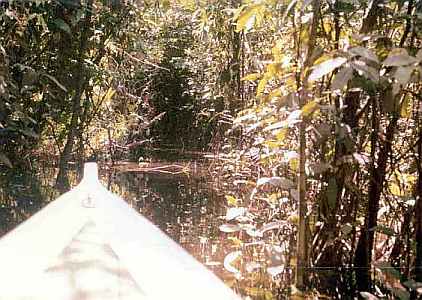
It's this rain-forest/desert metaphor that got me thinking about Johnson's words. As a former reporter and editor, I follow the newspaper industry's battle for survival. As a novelist, I've had the chance to spend time in the Amazon rain forest, beneath the old-growth canopy and on fire-razed tracts where the green fortress has been demolished.

I've also traveled through the caatinga, “the white forest,” in the vast backlands of Brazil, of which I have written:
There is no forgiveness in the caatinga. When the rains fail and the earth cracks in the riverbeds, the parched northeaster roars between thickets of scrub, cactus, and leafless misshapen trees. The wind blasts eroded hills, howls between rocky outcrops, swirls through dust-filled depressions. The northeaster passes, and there is a profound silence.
The green forest to the west is fecund, alive, its canopied plants seeking light. The white forest clings to the earth, its strangulated growth shrinking from the sun, a blistered wound across the northeast bulge of the continent.
There is a metamorphosis when it rains. Turbulent rushes of water feed the clotted earth; the tangle of gnarled, stunted trees is transformed into a low, flowered forest; succulent grasses thrive magically in the thin soil. But always the great droughts return; the rains fail and the rivers disappear. The rigid trees and cacti – chaotic and impenetrable in places – and the dwarfed plant cover remain, an ugly mesh of foliage for mile after mile. This gray monotony of tinder-dry vegetation is deceptive, for it hides the true nature of the caatinga: a creeping desert.”

I will not, for one moment, accept that we've been living in a news “desert” for the past century.
I have worked on national newspapers and local rags. I've stepped up to my news editor's desk every morning to check my day's assignment as crime reporter, court reporter, general reporter. I've never known a news editor turn a blind eye to any story, national or local, worth reporting, even though it would run a few lines at best. At other times, as a feature writer, I was on assignment not for a day or night but a week, even months on occasion digging in depth for the facts.
Roots of Democracy
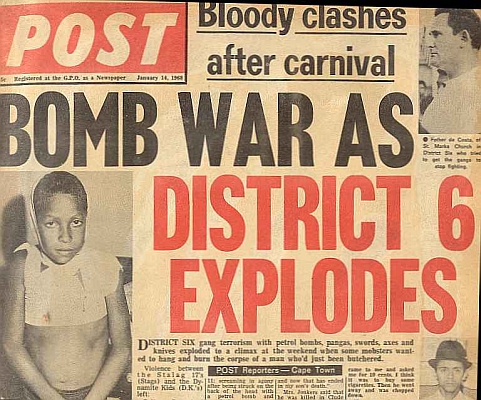
Generations of professional editors and their staffs from the earliest “courants” onward have worked to nurture and protect a true “old-growth” canopy: the free press that shields the roots of our democracies. I think of editors I worked with in apartheid South Africa. I remain in awe of their courage and conviction in times of great challenge, when their presses could've been stopped almost as swiftly as it will take to throw the switch on a web news distributor.
I agree with Clay Shirky who sees newspapers in the middle of a transition as wrenching as that following Gutenberg's invention, a revolution demanding that all print media adapt. On newspapers, in particular, Shirky says that there is one possible answer to the question, 'If the old model is broken, what will work in its place?' -- “The answer is: Nothing will work, but everything might. Now is the time for experiments, lots and lots of experiments, each of which will seem as minor at launch as craigslist did, as Wikipedia did, as octavo volumes did.”
I keep no deathwatch on newspapers, though whenever I see a report of a paper going out of business I regret its passing, as would anyone who has known the camaraderie and dedication in a newsroom. There's no question that many papers, big and small, will vanish from newsstands. Will all newspapers disappear? I think not. One possibility is that we will see the emergence of six or seven national papers, with strong regional underpinnings, similar to what exists in the United Kingdom.
What I do know is that once destroyed, the real “old-growth” giants of the Amazon are at best replaced by inferior secondary growth. At worst, the caatinga advances, chaotic and impenetrable, with thickets of cactus, shrub and misshapen trees, a gray monotony where silence is profound.
It is this vision that troubles me when I think of Steven Johnson's grassroots newsroom, where everyman and everywoman pound the beat in all directions, clamoring for their story to be told - or aggregated - this instant. A media of mass fragmentation incoherent in all its coherencies.
In ancient times, when our ancestors sat by their fires in the shadow of the great forest, it was the elders and the shamans who shared and interpreted what they knew. The people of the tribe sat close together and listened.
[Images: News diagram, (c) Steven Berlin Johnson; Brazilian rain forest and caatingas from Brazil: The Making of a Novel. Note * Steven Johnson's figure for YouTube viewings of President Obama's speech, probably cumulative of various postings.]
How Benjamin Button Got His Face
Digital-effects guru Ed Ulbrich unveils the making of the digital head that sits on the broad shoulders of Brad Pitt as he ages backwards in The Curious Case of Benjamin Button.
It took Ulbrich and an Oscar-winning team of 155 people at Digital Domain two years to create a visualization drawing on a 3D database of every movement Brad Pitt's face is capable of doing. Ulbrich calls the technique “emotion capture,” with the actor's idiosyncrasies translated onto a digital head and working in harmony with the rest of his body.
In this eighteen-minute talk from TED (Technology, Entertainment, Design) Ulbrich explores elements of photo-real digital humans, in a curious way an eye into the imagination of F. Scott Fitzgerald and his 1921 short story on which the movie is based.
The Spike - Requiem for the Devil's Railroad of the Amazon

Who was the man who swung the hammer that pounded this spike?
Was he a peasant from the thorn-studded backlands of Brazil? Was he a boy from Philadelphia, U.S.A praying to make his fortune with the rubber barons? Was he a laborer from the Caribbean who rode one of the recruiting vessels down the river sea to Manaus?The inevitable question rises, too: Was my unknown hero one of seven thousand who perished beside the waters of the Madeira-Mamoré, which the locals call Love-Me-River. Some say the toll was higher, with one life lost for every tie laid along three hundred and sixty infernal miles.
The Estrada de Ferro Madeira-Mamoré (EFM-M) was first begun in 1872 and witnessed several disastrous attempts at construction before U.S. and British engineers finally completed it in 1912. The line ran from Porto Velho in Rondônia, Brazil to Guajará-Mirim on the Bolivian border. The objective was to bypass the treacherous rapids of the Madeira-Mamoré Rivers and facilitate the transport of landlocked Bolivia's rubber to the Amazon and the Atlantic.
On April 30, 1912, the last tie was placed at Guajará-Mirim and the first train made the run to the terminus at Porto Velho and the docks, where steamers stood ready to ply the navigable stretch of Love-Me-River.
By that year, too, the seeds of hevea brasiliensis surreptiously taken from the Amazon thirty years earlier by the Englishman Henry Alexander Wickham and planted in Kew Gardens in London had long since been successfully transplanted in Asia. The man-made rubber plantations were on the point of capturing the world market.
Within two decades, the ruin of the Brazil's rubber empire was complete. At Manaus, the Paris of the Amazon, the lights of its Opera House were extinguished, Monsieur Eiffel's iron palaces neglected.

The steamers plying Love-Me-River dwindled and the Madeira-Mamoré railroad fell into decline, used only by locals for ever-decreasing distances as equipment deteriorated. Less than three decades after its opening, the line was being reclaimed by the jungle.
I spent a week beside the Devil's Railroad when I was researching my novel, Brazil. Under a blazing sun at Porto Velho, I'd a feeling of unreality standing below an abandoned steam-powered crane emblazoned with "Industrial Works, Bay, Michigan." In the marshalling yards, half a dozen Baldwin locomotives rested with their steel wheels buried in the sand.
I imagined the massive crane clanking and hissing as it led the advance along the new rail bed. I could imagine it but couldn't ignore the twitter of birds that nested in the rusting hulk.


A few miles beyond the depot lay a snake-infested cemetery with hundreds of foreign workers from lands as far afield as Denmark and China. The forest was the last resting place for countless Brazilians who came from the dry lands and died in a wet fever-ridden hell.
It was near Guajará-Mirim, the end of the track, where I picked up the spike, walking beside the rusted rails, treading between splintered ties.
Toward dusk, I heard the distant wail of a train whistle, long and lonesome. Momentarily, there came the sound of a locomotive roaring along the passage between the trees.

[Images from Brazil: The Making of a Novel (c) 2009 Errol Lincoln Uys]
Kindle 2: Who Says E-Books Aren't "Real" Books?
“I have no idea how this kindle thing works and don’t want to know. I have
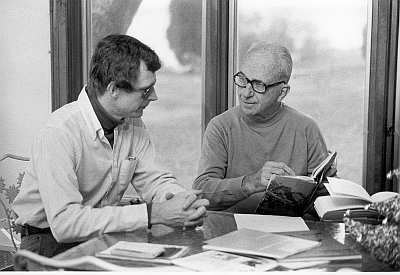
a library I cherish and I take pleasure in touching and browsing through my old and new friends. I love the smell of new books, funky bookstores and book sales where I can find exciting surprises,” says one critic. “I cannot imagine a world without books...”And nor can I, unless seen through the mirror of Ray Bradbury's Fahrenheit 451. [Where books are burned, not because of censorship but a tyranny of mindless television, as Bradbury says in a web interview.]
Other critics lament that Kindle books can't be loaned to friends, will “break” if dropped, and bear no comparison to real books.
I'm surrounded by old favorites I can pick up and browse in an instant. I understand the loss these book lovers fear. I look at a shelf with a fine set of the works of Charles Dickens. I think of the best of days spent with Copperfield or a dozen other tales.
I love holding a book in my hand, but know that what captivates me as I sit with Dickens is not paper but ideas. – The story will never change, only the way in which it's presented.
Some prejudice against reading online may be rooted in readers' experience of the early days of e-books with wretched formatting and mediocre delivery. Kindle and other e-readers are already light years away from those recent dark ages, their world of “books” and ideas expanding at warp speed.
Nothing illustrates this more than the British Library's online rare books. Anyone who has ever been in the rare book section of a library knows the rigmarole one goes through and for good reason. Few people will ever get to hold original treasures such as Leonardo da Vinci's Sketches in their hands.
The British Library's Turning the Pages® makes it possible for everyone to do just that, browsing and turning the pages of Sketches and a selection of other priceless works. – As “real” and close-up as you ever likely to see them!
The Plan for A Novel of America
- Reading and Research (current, see remarks on "Notes" in the guide)
- Plotting a rough outline (the next stage, which should be complete by March 2009. (See examples of the plotting for The Covenant and Brazil. )
- Manuscript (draft, to be posted serially on line, two or three times a week. Readers’ comments invited. The complete working draft will be available on line, with interactive images, maps and web links. See, Kindle Illustrated Guide to Brazil.)
Like Brazil where my saga spans six book sections, I plan a similar structure for A Novel of America.
Each completed section will be published on Kindle and initially made available via Print on Demand. The final manuscript with all sections will be offered in a traditional book form.
I’ve launched A Novel of America as an independent writing project. A traditional publisher could come aboard along the way, but if not I’m ready to go it alone, one of the true empowering features for the serious writer of the Digital Age.
Monetization is the challenge, of course, as others have pointed out. The first step will be to build a subscriber base with a loyal following who have an eye on the future and an appreciation of good writing that both entertains and educates.
A prospect as vital as when the first story-teller sat beside the glowing embers and began, "Once upon a time, when the sky was new..."
A Simple Guide to A Novel of America

At the suggestion of a reader unfamiliar with blogs, here’s a simple site map for the main portal to A Novel of America:
Column One
Regular posts appear here. Items tagged as “Notes” derive from current research and reading.
When I begin writing the novel, my “Drafts” will be posted here.
The latest post or instalment is always at the top.
Posts can be commented on or bookmarked and shared.
All posts can be found via The Archives (see Column Two).
Column Two
About the Project gives a brief overview, plus an invitation To All Readers to jump in and comment.
The Archives lists Posts (see Column One.) – These appear chronologically, which will make it easier to follow the story when the writing begins. – I will provide a link to a web page with the complete Draft.
Web Research Links cover the many areas I’m investigating. These are updated weekly.
Images provides an image bank collected as I go along. Maps are selected for relevance to locales and themes of the novel.
Books I’m Reading are exactly that rather than a core bibliography.
The Boston Pages comprise my earlier American research, as discussed in this post [Timing is Everything.] They give a good idea of how A Novel of America will unfold on this blog: The Outline, The Family Trees, Research Links and Notes, Clipping File. The Library and Notebooks are made public via Google
Column Three
About the Writer provides links to my home page and published works.
THE BRIDGE is the companion blog to A Novel of America, where I discusss the nuts and bolts of the project.
Signature Posts are key items that take you behind the scenes.
Subscribe by email is free and offered by Feedburner, where your privacy is protected, your email address never revealed. You can unsubscribe at any time. – Subscription via news reader is also available. [Of course, if you choose not to subscribe, simply bookmark the site and check in whenever you wish.]
Topics is a list of subjects covered in the posts - clicking on an item of interest will take you to the relevant post.
Support A Novel of America allows you to make donations via PayPal. You can also support my work whenever you visit Amazon. All you have to do is access Amazon via the search box on my site or my associate store: any item bought on your visit to Amazon earns me a commission, with thanks.
Writing a Novel "live" on the Internet
I live surrounded by books. I still welcome my daily Boston Globe. I watch the rising tide of red ink threatening to engulf the presses and look back to a time when I was a young reporter in a hectic city newsroom: never could I have imagined a day when the very existence of newspapers would be moot, not the yellow rags but the great gray ladies of the world.
In less than two decades, the Digital Revolution spurred by the Internet has radically altered the way we communicate in private and in public. Twenty years ago, social networks like My Space, Facebook and Gather where millions of people interact daily did not exist. The idea of a single article generating 10,000 "letters to the editor"was inconceivable, yet we saw this in the last election with comments racked up on some Huffington Post headliners.
Startling as these changes are, Robert Coover suggests we’re in the "silent movie" era of the Digital Age – the early stages of a transition as fundamental as going from writing on parchment scrolls with reed pens to inking text-blocks. An advance that spanned a century and a half, during which medieval copyists existed alongside printers of "good cheap" books.
It’s this idea of transition – lightning fast, by comparison, given the exponential growth of the Web’s reach and application – that underscores my interest in picking up the new web writing tools.
The innovative communities at if:book, Grand Text Auto, MIT Communications Forum and other sites I visit regularly represent the vanguard of change. (See links opposite: "Inspiring Inquiring Intuitive") I’m intrigued by such digital works as Gamer Theory, In Search of Lost Tim, 253, and the squawk of networked fiction on the lines of A Million Penguins.
I love these edgy explorations of digital literacy but I see my friends rolling their eyes and shaking their heads. Baby boomers mostly, they’re the same folks who stood in line for the newest Michener saga with multilayered facets of entertainment and education.
This is where I see potential for transitional works like A Novel of America. I’ve intentionally kept the portal simple with a linear framework highlighting techniques Michener and I employed as seen in my web archives for Covenant and Brazil.
A key difference lies in the wealth of interactive material: blogged working notes, research links, maps, images, books I’m reading. As the work takes shape, I will share plot lines and draft manuscript, all open to comments which I will moderate.
A Novel of America is not a networked book but a writer’s invitation to explore a world as new to me as most of the readers I hope to reach.
Robert Coover’s History of the Future of Narrative
Novelist Robert Coover, a founder of the Electronic Literature Foundation, traces the marvelous story of narrative from the invention of writing in the Bronze Age to the dawn of our own Digital Age – from clay tablet to papyrus and parchment scrolls, and from movable type and printing presses to global hypertext.
In this keynote address at the Electronic Literature in Europe seminar last September, Dr. Coover looks at the Digital Revolution and its impact on those who create books and those who read them. The talk is a short version of a chapter in the forthcoming Cambridge History of the American Novel. [The editors at Cambridge University Press have graciously granted Coover permission to allow the recording to circulate freely on the Internet on a free, open-access basis.]
A History of the Future of Narrative: Robert Coover from Scott Rettberg on Vimeo.
Timing is Everything...
You unquestionably have the talent to write almost anything you direct your attention to. You are a great researcher and know how to put words together most skillfully as your work on the manuscript proved. You have also, from what I gleaned in our conversations on the long walks, an acute sense of timeliness in subject matter."
Long before this when outlining a proposed Boston novel, it didn't escape me that while I focused on Boston, my story goes far beyond one city as a glance at the Outline and Working Notes shows: Puritans, Sons of Liberty, China Trade, Sons of Union, Convoy, Boston Common
As I worked I had the idea that I should be looking beyond Boston -- to a story of America.
Michener had been thinking casually about a book on South Africa for years. When the idea became a reality and we hunkered down at his Maryland home, he saw...
"an immense amount of work to be done over the next two working years. The good feeling is that many persons who hear of the project say that they wish it were completed now. This augers well for the timeliness and the gravity; it would be most appropriate if it were in print right now, but I suspect it will be just as timely when and if it finally does appear."
Today, I have the same sense of timeliness about a book on "America."
I see my work on Boston as a good starting point with much of the 17th to mid-18th century well structured. I need extensions to early Virginia/slavery/maybe a Florida/New Orleans angle; and expanded 1776 material. But the Boston location is excellently placed for the core story leading to the early 1800s.
Then I begin moving my families out West. Without having plotted a line, I find Kansas City and some locale in Texas beckoning: Boston Irish-ranchers; the Mexican War; the California Gold Rush, for a start.
The Boston families, Steeles, Tranes, Lynches and Flys will carry the story to the South and West. So, for example, Farrell Lynch’s Irish background and story remains the same except that after landing in Boston he moves on west.
Adam Trane’s line provides the adventurers, the explorers. The Lynch line – Farrell + Malachy, the Water Rat – become the western movers and shakers. The Steeles of Boston remain in the East and via Captain Ben of Houqua fame continue to look outward and non-isolationist.
Nixie Fly's descendants carry the slavery/abolition story – Boston, Kansas, Carolinas – on a bigger canvas than my original Orlando/Boston plotline but walking the same walk.
What I aim for with "America" is a book that will hopefully achieve what one Brazilian, Wilson Martins, saw in my novel, Brazil:
“Uys was the first to understand Brazil as an imaginary creation, coherent in its apparent incoherency, organic in its historic development, complimentary in its contradictions and antagonisms, unitary in its differences and obscurely answering to the famous “will of being a nation” that Julien Benda identified as the motivating force in the history of his own country.”
I've decided to leave my Boston working pages on the web and revise them as I go. After all, presenting a draft online involves the same thought that goes on in the attic! -- All the elements that go into the shaping of a novel.
An Attic with a View

- “I haven’t published anything for nearly twelve years because, frankly, I didn’t have a model that made any sense to me. One day when I was walking around London I suddenly realized I did have a model. I joking labeled my little conceptual breakthrough “a unified field theory of publishing.” – In short, the understanding of how a number of different aspects both compliment and contradict each other to make up a dynamic whole in the era of the digital network.
- The key element running through all these possibilities is the author’s commitment to engage directly with readers. If the print author’s commitment has been to engage with a particular subject matter on behalf of her readers, in the era of the network that shifts to a commitment to engage with readers in the context of a particular subject.
- This is not to suggest that one size will fit all authors especially during this period of experiment and transition. Some authors will want to lay down a completed text for discussion; others may want to put up drafts in the anticipation of substantial rewriting based on reader input. Other “authors” may be more comfortable setting the terms and boundaries of the subject and allowing others to participate directly in the writing…
- As networked books evolve, readers will increasingly see themselves as participants in a social process. As with authors, especially in what is likely to be a long transitional period, we will see many levels of (reader) engagement – from the simple acknowledgement of the presence of others to very active engagement with authors and fellow readers.
“One thing I particularly like about this view of the author is that it resolves the professional/amateur contradiction,” adds Stein. “It doesn’t suggest a flat equality between all potential participants; on the contrary it acknowledges that the author brings an accepted expertise in the subject AND the willingness/ability to work with the community that gathers around. Readers will not have to take on direct responsibility for the integrity of the content (as they do in Wikipedia); hopefully they will provide oversight through their comments and participation, but the model can absorb a broad range of reader abilities and commitment.”
I believe in the value of big literary works like Brazil and The Covenant that use good story-telling to entertain and educate. Like Stein, though, I’ve come to question the model.
In two decades following Michener’s breakthrough Hawaii, millions of readers eagerly awaited Jim’s next behemoth. High-brow critics scoffed at a “bricklayer” plastering on facts; Michener’s fans stood in awe of his grasp of the lands and people whose epic he brought home to them.
By the 1990s, the Michener-style novel was rare or presented in such watered-down fashion as to be of no lasting value. The old editors – I think of Albert Erskine and Herman Gollob, who made the long march through Brazil with me – laid down their pencils. Publishers and agents lost interest in the genre. Even less appealing was the idea of funding the fieldwork critical to planning and writing an epic.
Then came the Internet moving with lightning speed to a point where a multi-layered Web-based book project like A Novel of America becomes feasible. It also portends a paradigm shift in the roles of author/reader/editor/publisher, as Bob Stein suggests:
“An old-style formulation might be that publishers serve the packaging and distribution of an author’s ideas. A new formulation might be that publishers and editors contribute to building a community that involves an author and a group of readers who are exploring a subject."
Abandoning the “attic” to write in public is a radical change for me that brings exciting opportunities and real challenges. I see A Novel of America as an exploration of creativity that seeks to bridge the old and the new; taking a page from the past to work on a book of the future.